Hillman Fasteners in a Pinch: Choosing the Right Screw, Socket, or Driver When Time Matters
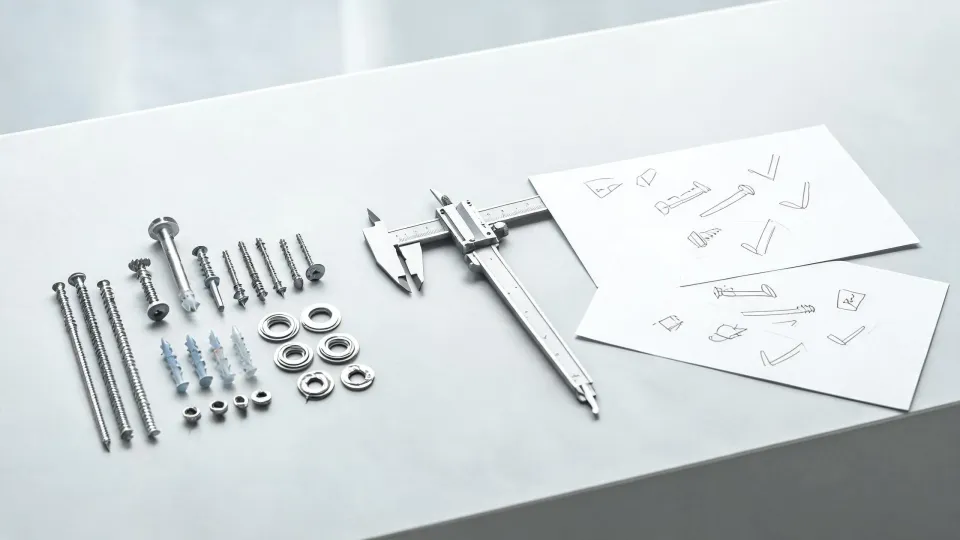
I've lost count of how many rush orders I've seen derailed by the wrong fastener. In my role coordinating emergency supply for contractors and industrial buyers, I've handled 200+ same-day turnarounds over the last seven years. And the pattern is always the same: someone grabbed whatever screw was closest, skipped the spec check, and paid for it later with a redo.
Here's the thing about fasteners: there's no universal answer. It depends on what you're building, what materials you're joining, and how much time you actually have. So let's break this down by scenario—because your situation is probably not the same as the next contractor's.
Scenario 1: Structural Wood-to-Wood Connections
If you're attaching heavy timber, deck beams, or anything load-bearing, you're looking at a construction lag screw. Hillman's fasteners in this category are typically hex-head, zinc-coated, and designed for high holding strength. But here's the nuance: not all lag screws are created equal, and time pressure isn't an excuse to skip the pilot hole.
What I mean is that a lag screw needs a proper pilot hole to avoid splitting the wood. In an emergency, I've seen crews skip this step to save 20 minutes—and it cost them a full afternoon when the beam shifted. If you're in a rush, look for a lag screw with a sharp point and aggressive threads that can self-start. It won't eliminate the pilot hole, but it'll make the job faster than a standard lag.
My advice: In a time crunch, pre-drill all your holes first, then drive the screws. It's counterintuitive, but it's faster than doing it piece by piece.
Scenario 2: Sheet Metal or Thin-Gauge Steel
For attaching metal sheeting, ductwork, or light-gauge steel framing, a hex washer head drill screw is the workhorse. The hex washer head gives you better driver engagement and a larger bearing surface—which means less stripping and fewer stripped-out heads. The drill point is the real time-saver though: it eliminates the need for a separate pilot hole, so you can drive it in one pass.
I remember a client in March 2024 who needed 500 fasteners for a metal building retrofit, 36 hours before the deadline. They'd planned on using self-tapping sheet metal screws, but those require an initial punch or pilot hole. We swapped them out for Hillman's drill-point version and the crew finished 40% faster. That's the kind of efficiency gain you can't ignore.
My advice: If your substrate is steel under 14 gauge, a drill screw with a hex washer head is your best bet. It's not the sexiest tool in the box, but it'll save you hours.
Scenario 3: Deep Recesses and Protruding Threads
Ever tried to tighten a nut on a long bolt inside a recessed pocket, only to realize your socket's too shallow? That's when a 3/8-inch pass-through socket set becomes your lifeline. Unlike standard sockets, these allow the bolt to pass all the way through, so you can grip any length of thread without adding spacers or extension hacks.
This is one of those products I recommend to anyone doing equipment assembly or trailer hitches—anywhere you're dealing with studs that stick out past the nut. The time savings aren't massive per fastener, but across a machine with 80 connections, it adds up fast.
My advice: Get a pass-through set with both standard and deep sizes. It's one of those tools you'll reach for more than you expect, especially when the clock's ticking.
Scenario 4: Precision Work and Tiny Screws
Now for the opposite end of the spectrum: small screws in tight spots, like electrical panels, control boxes, or eyeglass hinges. A Kraftform micro flathead screwdriver—with its cushioned handle and precision-ground tip—makes a huge difference. The handle shape transfers torque efficiently without forcing you to death-grip it, and the flathead tip is ground to fit snugly so it won't cam out.
At least, that's been my experience with European-designed drivers. I've tested six different brands, and the Kraftform line stands out for control. It's not the cheapest option, but it's the one that won't strip a brass screw 10 minutes before a final inspection.
My advice: If you're doing electrical or fine mechanical work, don't buy a cheap driver. The cost of one stripped screw is higher than the price difference.
Scenario 5: Is a Spade a Garden Tool?
This one comes up more than you'd expect, especially from people new to landscaping or excavation. The short answer: yes, a spade is a garden tool. It's a long-handled shovel with a flat, sharp blade for digging and edging. But depending on your context, 'spade' can also mean a spade bit—the drill accessory used for boring holes in wood.
If you're shopping online and see 'spade' in both gardening and hardware sections, don't be confused. For fastening work, a spade bit is for drilling holes, not for driving fasteners. It's a decent tool for rough holes in framing, but it won't give you a clean bore for precision work.
My advice: If you need a garden spade, buy one from a gardening supplier. If you need a spade bit, grab one from a tool supplier—and pick up a brad-point bit if the hole has to be clean.
How to Decide in Under 60 Seconds
When the clock is running, here's the quick checklist I use:
- What am I joining? Wood-to-wood means lag screws. Metal or thin materials means drill screws. Fine mechanicals means precision drivers.
- What's the load? Structural work gets structural fasteners. Don't downsize to save a trip.
- Can I reach it? Deep bolts need pass-through sockets. Tight spaces need slim-profile tools.
- What's the cost of failure? If a stripped screw or an hour of rework risks the deadline, spend the extra $5 on the right tool.
The reality is that fasteners and hand tools are cheap. Labor and rework are expensive. When you're under pressure, the right product isn't a luxury—it's a schedule saver. Take the extra minute to match the tool to the job, and you'll make up that time tenfold.

Maren Jorgensen
Maren Jorgensen is an independent hand tool and torque applications analyst covering wrenches, pliers, screwdrivers, hammers, sockets, ratchets, hex keys, and tool sets. She applies ISO 6789-1 torque-tool conformance principles while examining jaw capacity, leverage, fastener engagement, torque range, accuracy, handle geometry, and material hardness. Her practical guides help tradespeople and procurement teams select suitable tools, plan controlled tightening, and compare durability without relying on brand reputation alone.