What a Coastal Dock Order Taught Me About Hillman Stainless Steel Carriage Bolts, Hand Tool Sets, and Hidden Costs
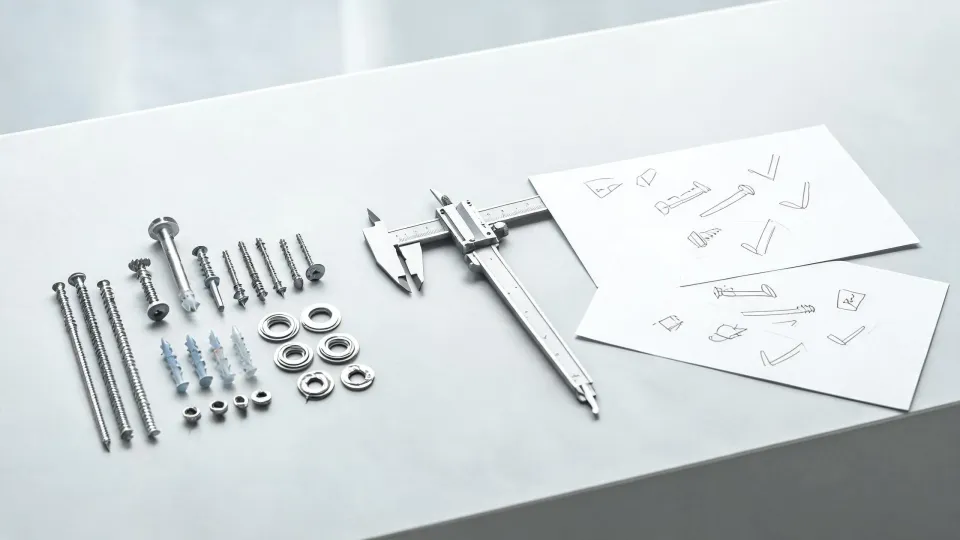
-
In March 2024, a Coastal Dock Order Changed How I Buy Fasteners
-
The quote that looked good—until I added the hidden costs
-
Why I switched to Hillman stainless steel carriage bolts
-
The hand tool set detour—and what best-rated actually means
-
The 220v air compressor wiring diagram almost became the real problem
-
What the order actually cost
-
The lesson I keep relearning
In March 2024, a Coastal Dock Order Changed How I Buy Fasteners
I’m a procurement manager at an 85-person hardware distribution company. I’ve managed our fastener and tooling budget—roughly $1.8 million annually—for almost seven years. I’ve negotiated with more than 40 vendors and documented every order in our cost tracking system. But in March 2024, a single order for a coastal dock maintenance project forced me to rethink how I evaluate Hillman hardware, stainless steel carriage bolts, and even hand tool sets.
The customer was a marine contractor. They needed fasteners for a saltwater-exposed pier repair, plus a small kit of hand tools for the crew: pliers, wrenches, and a few general sets. They also sent over a 220v air compressor wiring diagram because their portable compressor was being moved to a new trailer. I thought it was a simple quote. It was not.
The quote that looked good—until I added the hidden costs
We received three quotes. Vendor A quoted $4,200 for the fastener package, including Hillman stainless steel carriage bolts and miscellaneous Hillman hardware. Vendor B quoted $3,650. Vendor C came in at $3,480. I almost went with Vendor C. Then I calculated total cost of ownership, or TCO: Vendor C charged $180 for split shipments, $95 for packaging, and would not include the washers unless we bought a separate carton. Vendor A’s $4,200 included freight, packaging, and the correct nut and washer pairing. That was a 17% difference hidden in the fine print.
I’ve audited our 2023 spending, and that pattern is not rare. After tracking about 200 mid-range orders over five years—maybe 180, I’d have to check the system—I found that 31% of our budget overruns came from freight, split shipments, and rework. Not from the unit price. The most frustrating part of vendor management: the same issues recurring despite clear communication. You’d think written specs would prevent misunderstandings, but interpretation varies wildly.
Why I switched to Hillman stainless steel carriage bolts
The dock project was in a salt-air environment. The original spec called for galvanized carriage bolts. They’re cheaper. But when I looked at our warranty data from 2022–2023, galvanized fasteners on coastal projects generated more callbacks than stainless. According to Hillman’s product catalog (hillmangroup.com, accessed January 2025), its stainless steel carriage bolts are available in 18-8 stainless for general exterior use. 18-8 is not a magic bullet—no fastener is rust-proof in every environment—but it resists corrosion better than standard zinc plating in humid, salty air.
I should add that we also had a packaging problem. Vendor C’s quote used generic bags with no grade marking. For a contractor pulling bolts on a dock, that matters. The customer’s site supervisor told me later: “If I can’t see the grade, I don’t trust it.” That comment stayed with me. When we switched to Hillman hardware, the bolts arrived in labeled boxes, with head markings and lot information. The crew noticed. That’s the quality perception issue in a nutshell: the product is the brand. The first thing a customer touches is the fastener, the packaging, the tool in their hand.
As of January 2025, quotes from three U.S. fastener distributors for 1/2-inch x 4-inch 18-8 stainless carriage bolts ranged from $1.85 to $2.60 per piece in 100-piece packs; verify current pricing because stainless surcharges move with nickel and scrap markets.
The hand tool set detour—and what best-rated actually means
While the fasteners were being sorted out, the same contractor asked for hand tool sets. The phrase they used was “what are the best-rated hand tool sets?” I’ve seen buyers chase Amazon stars. I’ve done it too (unfortunately). But for B2B work, ratings are only a starting point. We tested four sets in Q2 2024. The highest-rated set had comfortable grips and a lifetime warranty, but the pliers’ cutting edges dulled after two weeks of cutting tie wire. Another set, rated lower, had replaceable jaws and met ASME B107 series standards for pliers. That set lasted the season.
So when someone asks what are the best-rated hand tool sets, I now say: check the rating, then check the standard, the warranty process, and whether you can buy replacement parts. For pliers specifically, look at the pivot, the jaw alignment, and the cutting edge. A $29 set and a $79 set can look similar in a photo. They are not the same tool after 200 cycles.
The 220v air compressor wiring diagram almost became the real problem
The contractor also sent a 220v air compressor wiring diagram for the trailer install. I’m a procurement manager, not an electrician. My first instinct was to forward it to the maintenance lead and move on. But the diagram was for a generic compressor, and the actual unit had a different motor nameplate. The wiring colors didn’t match. That’s a safety issue, not a purchasing issue.
Per NFPA 70 National Electrical Code (2023 edition), motor wiring must follow the equipment nameplate, manufacturer instructions, and local code. We stopped the install and brought in a licensed electrician. The electrician confirmed the breaker and conductor size, then signed off. That added two days and about $600 in labor. It also prevented a much bigger problem. I’ve learned to treat 220v air compressor wiring diagrams as reference documents, not final instructions. If the diagram and the nameplate disagree, the nameplate wins—and a licensed electrician should make the call.
What the order actually cost
We won the dock project. The final fastener package, using Hillman stainless steel carriage bolts and Hillman hardware, came to $4,850. That was $650 more than the cheapest quote. But the callbacks dropped to zero, the contractor ordered two more projects in Q3 and Q4 2024, and our rework line item went to nearly nothing. I calculated the annualized savings from avoiding just one coastal callback: $3,000 to $5,000 in labor, freight, and replacement parts. That’s not a guess—it’s based on our 2023 callback log.
I’ve only worked with domestic vendors and mid-size contractors. I can’t speak to how this applies to international sourcing or giant EPC projects. My experience is based on about 200 mid-range orders. If you’re working with luxury marine or ultra-budget segments, your experience might differ significantly.
The lesson I keep relearning
Cheap fasteners are expensive when they fail. Cheap tools are expensive when they slow down a crew. A confusing wiring diagram is expensive when it delays an install. But the deeper lesson was about perception. When our customer opened the box and saw labeled Hillman hardware, stainless carriage bolts, and a tool set that didn’t fall apart, they trusted us more. That trust showed up in repeat orders.
So here’s my procurement rule now: calculate TCO, verify the standard, and treat quality as part of the brand. Whether it’s a Hillman stainless steel carriage bolt or a pair of pliers, the product is the first impression. And first impressions are very hard to invoice.

Leila Farzan
Leila Farzan is an independent welding, abrasives, and cutting accessories analyst covering welders, electrodes, wire, grinding wheels, flap discs, cutting discs, drill bits, saw blades, hole saws, and router bits. She references ISO 525 abrasive-product dimensions and ISO 9606-1 welding qualification concepts while examining wheel speed, grit, bond, electrode class, duty cycle, kerf, tooth geometry, and material compatibility. Her guides help fabricators choose consumables, control process risk, and compare cut or weld quality.