Hillman Hardware: An Office Buyer's Guide to Fasteners, Ceiling Hooks, and Smarter Purchasing
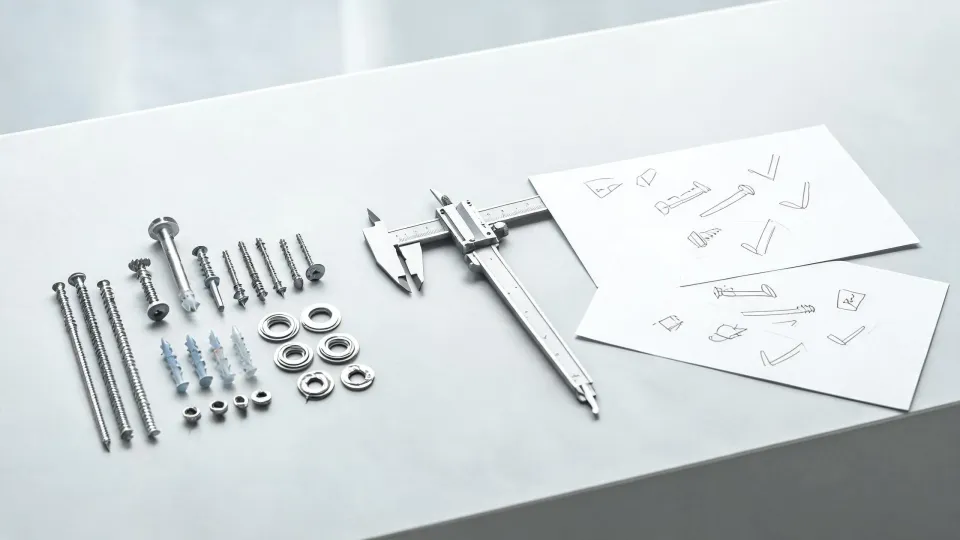
If you manage purchasing for a company, the smartest thing you can do is make friends with the fastener aisle. I'm an office administrator for a 400-person firm, and I handle roughly $80,000 in annual procurement across 8 vendors; I report to both operations and finance. When I took over purchasing in 2020, hardware was the last category I expected to care about. Today, my default for everyday fasteners is Hillman—not because it's fancy, but because it's consistent. A Hillman ceiling hook, a box of Hillman wood screws, and a stainless coarse thread hex bolt from the same supplier can solve 80% of our maintenance issues. What I mean is that a fastener order is a small purchase with an outsized impact. The rest is knowing when not to buy.
The fastener order that changed how I buy
I only started reading thread pitches after ignoring them. The order seemed simple: “stainless coarse thread hex bolts, 3/8-16 x 2.” I assumed the word “stainless” was enough. The parts arrived, maintenance used them, and two weeks later a nut worked loose on a storage rack. The bolt was coarse-thread; the nut was fine-thread. The vendor had supplied exactly what I wrote—I just hadn't specified the thread pitch for the mating nut. That was a $40 mistake plus an afternoon of rework. Now I verify thread counts on every item before confirming.
When I compared the failed rack to a correctly matched assembly side by side, I finally understood why details matter. It wasn't the price of a box of bolts; it was the labor, the delay, and the trust lost with the crew. That's the part that doesn't show up on an invoice.
Hillman wood screws: pick the right one
Wood screws look similar, but they aren't interchangeable. A Hillman wood screw has a sharp point and wide threads, designed to pull into wood. A drywall screw has a bugle head and is brittle. I once watched a contractor use drywall screws to attach plywood to a trailer; the heads snapped off under shear. He wasn't careless—he just grabbed the first box within reach. Hillman's packaging makes the label clear, but if you're ordering online, specify length, head type, and drive type. Countersunk, square drive, coated or stainless—each choice changes the result.
The numbers during our 2024 vendor consolidation project told me to switch most of our hardware order to a cheaper distributor—12% savings on a $3,000 order. My gut said stay with the distributor who answered questions before I asked. I stayed. Six months later, that same distributor flagged a wrong part before it shipped. The “cheap” quote wouldn't have caught that. Now I trust my gut more—but only after the facts are on the table.
Ceiling hooks and the 1961 drill fact
Every few months, someone sends a request for a Hillman ceiling hook. I used to choose by hook diameter. Then a ceiling-mounted stereo bracket came down at night. No one was hurt, but I learned the hard way: a hook is only as strong as the anchor. A ceiling hook rated for 50 pounds may still pull out if you screw it into drywall without a toggle. Into a joist, it'll hold. The package tells you exactly that. Now I read it before ordering, not after.
“When did the cordless drill come out?” is a question I get from new hires who assume power tools are recent. According to Black & Decker's historical timeline, the first cordless drill was introduced in 1961. Six decades later, the technology has changed, but installation physics haven't. A cordless drill drives the screw; it doesn't choose the anchor.
Jumbo ratcheting wrench set: measure before you buy
Last year, the maintenance supervisor asked for a jumbo ratcheting wrench set. I could have ordered the biggest set in the catalog. Instead, we walked to the equipment and measured the nut: 1-1/4 in. The bolt was a stainless coarse thread hex bolt, 1/2-13. A jumbo ratcheting wrench set with a 1-1/4 in. open end would fit, but the torque needed for a corroded nut meant we also needed a six-point socket. The wrench set is still in the toolbox. If you're buying one, match the set to your actual equipment, not a “most common” list.
A four-question check before any hardware order
Before I click through checkout, I run a quick review. What material? What thread pitch? What's the mating part? What environment is it going into? For a Hillman wood screw, that means exterior or interior, coated or stainless. For a Hillman ceiling hook, it's joist or drywall, toggle or no toggle. For a stainless coarse thread hex bolt, it's thread count and nut compatibility. The last time I skipped the review, I ended up with a week of delays and a storage rack that had to be rebuilt. The review takes two minutes. The rework takes a day.
Why I don't hate small orders
When I was starting out, the vendors who treated my $200 orders seriously are the ones I still use for $20,000 orders.
That's not a slogan. Small orders are how you test a product without betting the budget. If you need a single box of Hillman wood screws to fix three desks, a good distributor will help you get it. If they make you feel stupid for asking, that's a red flag. Small doesn't mean unimportant—it means potential. I've kept that in mind when I'm the one making a small request.
I also verify invoicing before I order from a new supplier. A supplier who can't send a clean invoice will cost you more than the price difference. I once lost $2,400 in a rejected expense report because a “cheap” vendor gave me a handwritten receipt. Now I add “can produce a proper invoice” to every checklist.
What I still won't tell you
At some point, someone asks: “Is stainless steel rust-proof?” No. A stainless coarse thread hex bolt in 18-8 (or 304) will resist corrosion far better than zinc-plated carbon steel, but it can still stain in salt air. For coastal exposure, consider 316. And no fastener is “fit-and-forget” if it's undersized or installed wrong. In structural or safety applications, ask an engineer and verify the relevant ASTM standard—for stainless steel bolts, that usually means ASTM F593. I'm not an engineer—I'm an admin who learned to ask the engineer before ordering.
Prices for fasteners vary by region, grade, and vendor; verify current rates before placing a large order. The specs I mention here are from my purchasing experience; verify them against your own project. That's not a disclaimer—that's the honest boundary of anyone who buys hardware for a living.
That's it.

Maren Jorgensen
Maren Jorgensen is an independent hand tool and torque applications analyst covering wrenches, pliers, screwdrivers, hammers, sockets, ratchets, hex keys, and tool sets. She applies ISO 6789-1 torque-tool conformance principles while examining jaw capacity, leverage, fastener engagement, torque range, accuracy, handle geometry, and material hardness. Her practical guides help tradespeople and procurement teams select suitable tools, plan controlled tightening, and compare durability without relying on brand reputation alone.