What Is Better: Impact Driver or Drill? My Answer Changed After $4,800 in Fastener Mistakes
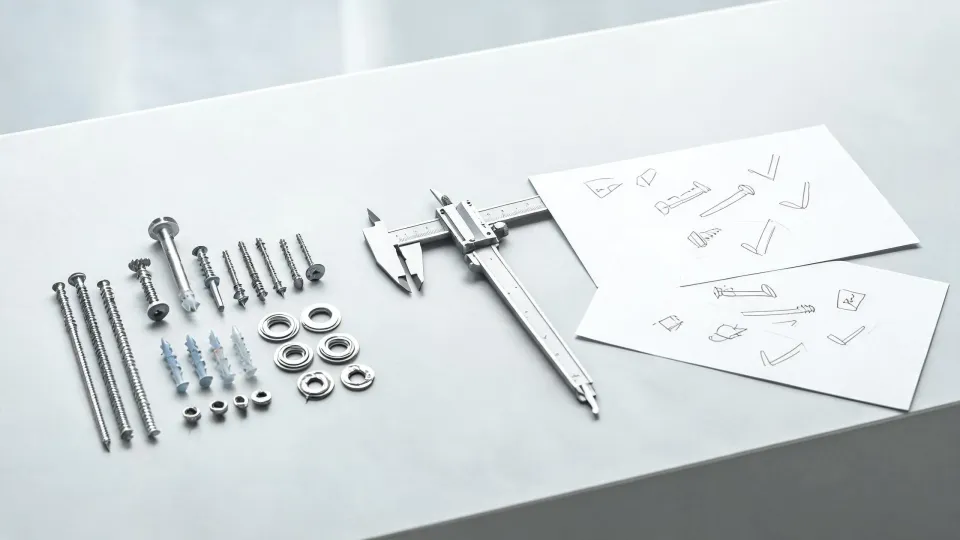
For the past six years, I've been the person who orders every screw, anchor, and insert nut used by our small commercial woodworking shop. That also makes me the person who has documented my own mistakes when those parts failed. The current count is 23 significant failures, and the total waste adds up to roughly $4,800 in materials and labor. I keep a checklist next to my desk now, but it's not the kind most people expect. The first item isn't about which tool to buy.
My Short Answer: Impact Driver, for Deck Screws
If you are driving exterior deck screws and you're trying to decide between an impact driver and a drill, the impact driver is the better choice. It applies torque in short rotational bursts instead of one continuous twisting force. That makes a difference when you're sinking a 3-inch screw into dense framing. A drill/driver is essentially a rotary screwdriver with a chuck: it turns the bit continuously until you release the trigger. That continuity makes it excellent for boring holes, but it can be harder on the bit, the screw head, and your wrist when the screw reaches full depth.
Here's where I've learned to stop the conversation. The tool answer is easy. The hard part—and the part responsible for most of my $4,800 in documented waste—is choosing the right fastener and then installing it the way it was designed to be installed.
Lesson 1: "Galvanized" Doesn't Tell You Enough
In 2021, we built 36 pressure-treated planters for a commercial site. I ordered a bulk box of screws labeled "galvanized deck screws" and sent them straight to the shop. I didn't check the coating standard, and I didn't ask whether they were rated for the preservative used in the lumber.
The next spring, we saw rust-colored streaks below almost every screw head. We ended up pulling all 576 screws and replacing them. The rework cost roughly $1,400 when I counted labor, new fasteners, and the unplanned trip to the site.
I learned the hard way that the word galvanized on a box is not a spec. Hot-dip galvanizing (referenced by ASTM A153 for hardware) produces a substantially thicker zinc coating than electroplated zinc, which is covered by a different standard, ASTM B633. Both are often called galvanized in everyday conversation, but they are not equal outside in the weather. In modern pressure-treated lumber, the copper-based preservatives can be aggressive toward unprotected steel, which is why fastener packages now often mention ACQ compatibility.
After that job, I switched our exterior standard to Hillman galvanized deck screws. What changed my process was not the color of the box; it was the fact that the label included ACQ compatibility. That forced our team to match the fastener to the wood treatment before choosing the tool. If a package doesn't state that kind of compatibility, I no longer assume.
Lesson 2: Fastener Systems Beat Tool Debates
After we solved the corrosion problem, the next bottleneck was speed. On bigger exterior jobs, a crew can easily drive more than a thousand screws in a day. Hand-driving that many with an impact driver is possible, but it's not the most efficient use of skilled labor.
We added a Quik Drive auto-feed attachment to our production process. Quik Drive screws—the collated strips designed for that system—are what made it work. I initially tried using generic collated screws from a different bin because the length and thread seemed identical. I was wrong. The strips jammed, the angle of the screw entering the workpiece would shift, and we lost most of the speed we were trying to gain (and a few hours of patience). The screw strips are not just screws held together with plastic; the collation, point geometry, and head design all have to work with the feed mechanism.
That lesson wasn't about impact driver versus drill. It was about buying a whole system instead of a single component. The fastest driver in the world is useless if the screw doesn't feed correctly.
Lesson 3: The Hillman Wood Insert Nut 880551
One of the most humbling entries in my mistake log involves a run of 20 hardwood table legs. I specified the Hillman wood insert nut 880551 because it creates a clean machine-screw thread inside wood. The idea was simple: install the insert into the leg, then use a bolt to attach the leg to the table frame. No exposed screw heads, no stripped wood.
The first leg split before the insert was fully seated. The installer had skipped the pilot hole and used an impact driver on full speed. The insert's external threads were trying to cut into wood that wasn't prepared for them. Instead of cutting cleanly, the body acted like a wedge in the end grain. That was a $110 piece of hardwood turned into firewood, plus the cost of the insert.
A wood insert nut is not a wood screw. Wood screw threads are designed to bite progressively and can often go in without a pilot hole. An insert nut needs a properly sized pilot hole and steady, square installation. This is where the drill/driver shines. A drill/driver acting as a rotary screwdriver with an adjustable clutch gives the installer a much better chance of stopping before the insert grabs crookedly. The pilot hole size printed on the package is not a suggestion.
Objection: "But a Drill Can Do More"
I understand the counterargument. If you're buying your first power tool and you need one tool for everything around the house, a drill/driver is the safer purchase. It drills holes, drives smaller screws, and can handle general hardware tasks. I'm not going to argue that an impact driver is a replacement for a drill.
But the question about deck screws is more specific. When the task is driving long, coated exterior screws, the impact driver is better. Its pulse action is easier on the drive recess and your grip. The drill still has a place in the same project: drilling pilot holes where needed and installing insert nuts at a controlled speed.
Impact Driver or Drill? What I'd Tell a New Hire Now
Today, my checklist reads: choose the right fastener for the material, match the system, then choose the tool accordingly. For exterior deck screws, that means an impact driver. For wood insert nuts, that means a drill/driver on a slower setting. It's less exciting than picking a favorite tool, but it's the advice I wish someone had given me before I started ordering fasteners.
When someone asks whether the impact driver or the drill is better, I try to answer their project instead of the tool aisle. What are you fastening, and what is the fastener designed to handle? That question would have saved me most of my 23 mistakes.

Maren Jorgensen
Maren Jorgensen is an independent hand tool and torque applications analyst covering wrenches, pliers, screwdrivers, hammers, sockets, ratchets, hex keys, and tool sets. She applies ISO 6789-1 torque-tool conformance principles while examining jaw capacity, leverage, fastener engagement, torque range, accuracy, handle geometry, and material hardness. Her practical guides help tradespeople and procurement teams select suitable tools, plan controlled tightening, and compare durability without relying on brand reputation alone.