Hillman Barrel Bolts, Hollow Wall Anchors, Saw Blades and Welding: A Quality Inspector's Guide
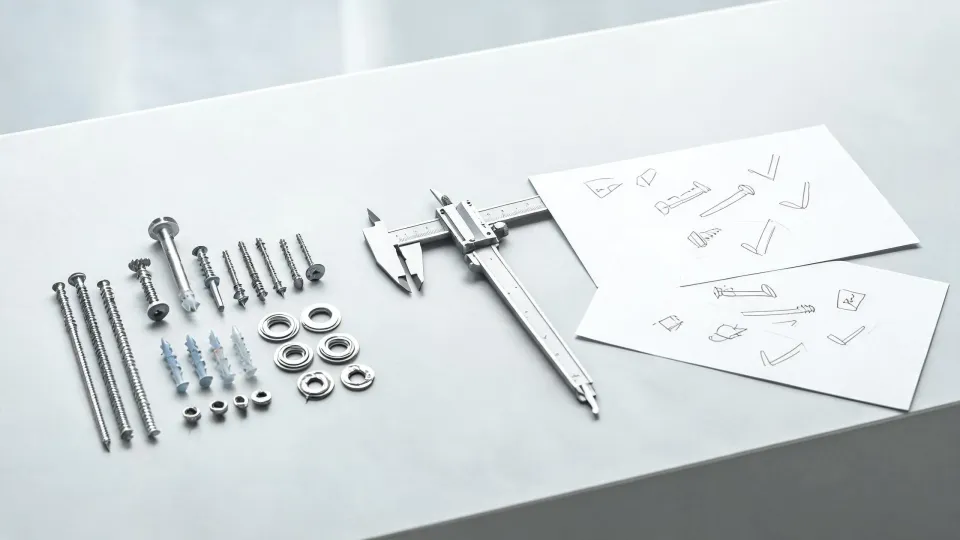
I'm the quality and compliance manager at a fastener distribution company. I review every item before it reaches customers—roughly 2,500 unique SKUs a year. In Q1 2024, I rejected 4.2% of first deliveries. That wasn't me being fussy; it was coating defects, off-spec threads, and packaging labels that didn't match the product inside.
People ask if Hillman is a good brand. I always answer with a question: Good for what? A Hillman barrel bolt that works fine on a shed door is not the same decision as choosing Hillman hollow wall anchors for a drywall shelf or stocking 7 1/4 saw blades for a framing crew. They don't compete. They solve different problems.
Hardware buying has no single universal answer. The right choice depends on the material, the load, the environment, and who is doing the installation. Let's break it into the four situations I see most often in returns: hanging something on drywall, securing a door or gate, cutting wood, and setting up heavier equipment or metalwork.
1. Hanging Something on Drywall: Hillman Hollow Wall Anchors
The biggest assumption I run into? 'Screw into drywall and move on.' It won't hold for long once a coat rack fills up with jackets. When there's no stud behind the drywall, you need an anchor. Hillman hollow wall anchors come in several styles—self-drilling drywall anchors, molly bolts, toggle bolts—and each has a different weight rating.
For a lightweight picture frame, a plastic expansion anchor is fine. For a shelf or a cabinet, use a toggle or a threaded anchor with a rated pullout value. Check the package for the rating on 1/2-inch drywall. As of April 2026, most manufacturers list these values clearly. If they don't, that's a red flag.
I learned never to assume the sample represents the final product after a batch of drywall anchors looked perfect in the catalog but cracked at half the rated torque. The supplier said 'within industry standard.' We sent them back anyway. That batch cost us $22,000 in rework and delayed a customer's launch. After I set up a verification protocol in 2022, returns on anchors dropped by about 34%.
Also, overdriving is a deal-breaker. Spin a self-drilling anchor too far and the wings can't open properly behind the drywall. Put down the impact driver when setting the anchor; use a low-speed drill or a manual screwdriver.
2. Securing a Door or Gate: Hillman Barrel Bolt
A Hillman barrel bolt looks simple: a round rod slides into a tube and catches in a staple. Simple can still fail. I've rejected barrel bolts because the rod had burrs. The customer would have returned them anyway once the rod scratched the tube on the third use.
Indoor application? Zinc-plated steel is honestly fine. Outdoor gate near salt water? Choose stainless steel. ASTM A153 covers hot-dip zinc coating on small parts, and it's a good baseline for outside hardware. 'Rust-resistant' doesn't mean maintenance-free. Check the bolt's movement once in a while, especially if the gate gets grit in the track.
Length is another spec that gets ignored. If the rod is too short for the door frame's thickness, the barrel won't engage fully. Measure the frame and the staple location before you buy. Looking back, I should have specified stainless on a coastal gate order years ago. At the time, zinc looked good enough. It wasn't. Now I ask suppliers for coating thickness in microns, not just 'galvanized.'
3. Cutting Lumber (and Some Metal): 7 1/4 Saw Blades
One of the most commonly restocked items in my warehouse is 7 1/4 saw blades. They fit standard circular saws, but they don't all cut the same way. Tooth count changes the cut:
- 18-24 teeth: fast ripping and framing cuts. Rougher edge, but it clears chips quickly.
- 40-60 teeth: crosscuts, plywood, and finish trim. Smoother cut, but slower and more heat buildup.
- Diamond or abrasive blades: masonry, tile, or steel cutting. Never use a wood blade for metal—that's a safety hazard and a red flag.
For a contractor who owns one blade, a carbide-tipped combination blade is a pretty good no-brainer. But for a deck crew framing all day, a 24-tooth rip blade clears sawdust faster and won't burn pressure-treated lumber. A 60-tooth finish blade on framing lumber is actually worse—more friction, more heat. More teeth is not always better.
Check the arbor too. A 7 1/4 saw blade marked for a 5/8-inch arbor won't seat properly on a metric arbor without the right bushing. I once accepted a pallet without verifying this (this was back in 2024). Every one came back. Now every purchase order lists arbor size and maximum RPM. The max RPM on the blade should be higher than the saw's no-load RPM, not equal to it.
4. Heavy Equipment and Metalwork: Washer Dryer Machines and Welding Machines
When you install washer dryer machines, the hardware that matters is usually underneath or behind them: leveling legs, vent clamps, anti-tip brackets, supply hoses. A $2 plastic vent clamp can crack after heat cycles and cost hundreds in service visits. Use metal clamps and check the rating on any wall anchor or screw you put near the machine.
Built-in utility shelves for the laundry room? If the shelf brackets go into drywall, follow the anchor rules from Section 1. Don't rely on hollow wall anchors for something that holds detergent bottles and maybe falls on a machine. Find a stud if you can.
The metalwork side of this question comes up often. Customers type, 'What are the three 3 types of welding machine?' The answer is consistent. The American Welding Society calls them processes; in the shop, people call the machines stick, MIG, and TIG.
- Stick (SMAW): works on dirty or rusty steel and outdoors. The electrode is the filler rod. Good for repair and field work.
- MIG (GMAW): continuous wire feed, faster on clean steel. Pretty easy to learn, and great for thinner stock up to a point.
- TIG (GTAW): more control, cleaner beads, works well on aluminum and stainless. Slower and takes more practice.
There is no best welding machine type. A trailer repair shop working on rusty frames may prefer stick. A shop making clean steel parts will probably pick MIG. A custom exhaust shop needs TIG. The question isn't 'which is best in the abstract'; it's 'which is best for the work you do.' Same principle as hollow wall anchors versus a barrel bolt.
Welding and mechanical fastening aren't rivals. Sometimes a bolted joint is easier to inspect and replace; sometimes a weld is the only practical connection. Choose based on load, access, and service requirements, not habit.
How to Tell Which Scenario You Are In
Before buying anything, answer three questions:
- Is the load static or dynamic? A fixed shelf is static. A gate or washer dryer machine vibrates and moves. Dynamic loads need more margin in the fastener spec.
- What's the environment? Outdoor, coastal, humid, or hot? Match the finish to the exposure: zinc, hot-dip galvanized (ASTM A153), or stainless steel.
- What happens if it fails? A dropped picture frame is annoying. A shelf falling onto a washer dryer machine, or a gate opening in a storm, is a bigger problem. Consequence should drive the spec.
Bottom line: 'Good hardware' is an incomplete sentence. A Hillman barrel bolt, a box of Hillman hollow wall anchors, a 7 1/4 saw blade, or a welding machine becomes good when it matches the task. Check the rating, ask for the spec, and trust a test result over a marketing pitch. That's how I run my inspections, and it's the same process you should use before you install anything.

Maren Jorgensen
Maren Jorgensen is an independent hand tool and torque applications analyst covering wrenches, pliers, screwdrivers, hammers, sockets, ratchets, hex keys, and tool sets. She applies ISO 6789-1 torque-tool conformance principles while examining jaw capacity, leverage, fastener engagement, torque range, accuracy, handle geometry, and material hardness. Her practical guides help tradespeople and procurement teams select suitable tools, plan controlled tightening, and compare durability without relying on brand reputation alone.