Why Fasteners Fail: A Quality Inspector's Honest Guide to Hillman Hardware
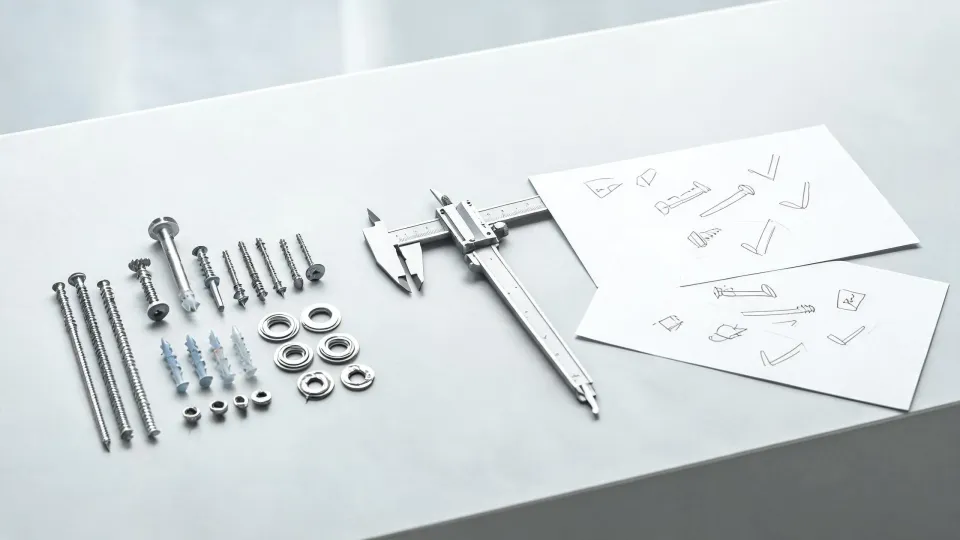
I review 200+ unique fastener SKUs every year before they're approved for production. Maybe 180–220, depending on the production calendar—I'd have to check the system. In four years of doing this, the pattern I keep seeing is consistent:
When a "bad product" complaint lands on my desk, the product usually isn't bad. It's a mismatch.
Let me unpack what I mean by "mismatch," because there are three kinds. Material, substrate, and tool. Get any one of them wrong, and the fastener fails. Not the factory. Not the metal. The combination.
The Surface Problem: "I Bought It. It Didn't Work."
Walk through any hardware store and you'll hear the same questions:
- "Why does this bolt keep corroding?"
- "Why did my screw strip out?"
- "Why doesn't this anchor hold in my wall?"
Every one of those sounds like a product failure. But when I trace them back—and I've traced back hundreds—nine times outta ten, it's a purchase mismatch. The material is wrong for the environment. The fastener is wrong for the material. Or the tool used to install it is wrong for the fastener.
I get why this happens. Fasteners look simple. A No. 8 screw is a No. 8 screw, right? A bolt is a bolt. Except the hardware industry is built on specifications, and every spec maps to a different job. You don't need to be an engineer to buy hardware. But you do need to look past the head shape.
Deep Cause #1: Material Mismatch—The Alloy Has a Job
Most "rust" complaints trace back to one thing: the fastener was made from the wrong material for the environment it ended up in.
Here's the practical short version.
Zinc-plated steel is an indoor fastener. The zinc is a sacrificial coating—ASTM B633 is the standard spec for that plating—and inside a dry, climate-controlled space, it lasts for years. Outdoors, exposed to weather and treated lumber, that same coating is already out of its depth. The plating fails, the steel underneath corrodes, and the customer calls it "defective." The fastener didn't fail. It ran out of design life.
Stainless steel is the outdoor choice. A Hillman stainless steel carriage bolt, for example, gets its corrosion resistance from chromium alloyed into the steel itself. That's not a coating that can wear away; it's the structure of the metal. Yes, it costs more per piece. But compare that to the labor cost of pulling out corroded hardware and replacing a deck board. Stainless is cheap in total.
Brass is a specialist. The Hillman wood insert nut 8 x 32 brass (2 pack) is one of my favorite products in the lineup—for the right project. Brass doesn't rust, it doesn't spark, and it cuts a clean thread into wood. It's perfect for indoor furniture or shop jigs where you need a reusable thread to assemble and disassemble again and again. Take it outdoors into pressure-treated lumber, though, and soft brass is going to struggle.
One thing I've learned to check on these little inserts is thread form. We received a batch a while back where the thread pitch was off by a few thousandths—invisible to the naked eye, but a thread gauge caught it immediately. The vendor argued it was "within industry standard." We rejected the batch anyway and made them re-cut it at their cost. Precision matters more with an insert nut than a simple screw, because you are creating a permanent thread that has to engage cleanly every single time.
Deep Cause #2: Substrate Mismatch—Wood Has Rules
The second mismatch is about what you're fastening into. Let's compare two common wood fasteners, because they get swapped more often than people admit.
A carriage bolt goes through the whole stack—through both pieces of wood, a washer, and a nut on the far side. The square neck under the domed head is the part nobody notices, but it's brilliant: it bites into the wood and stops the bolt from spinning while you tighten the nut. If you can access both sides of the joint, a carriage bolt is a solid structural choice.
A wood insert nut does the opposite. It's a threaded body you screw into a single piece of wood, and it creates internal threads for a machine screw to engage later. No need to reach the back side of the work. That's why you see them in furniture, display fixtures, and commercial prototypes. The brass 8-32 insert nut is exactly this—it gives you a strong, repeatable thread in wood that would otherwise strip out after two or three disassemblies.
Where it breaks down: people treat one as the other. If you can only access one side of a joint, a carriage bolt won't work. If you're building something structural under real load, an insert nut is not a substitute for a through-bolt. Match the fastener to the anatomy of the joint.
And please—drill the pilot hole. I made this mistake myself: I skipped drilling when mounting a heavy gate latch, and split a hardwood post. A $200 piece of wood ruined, not by the fastener, but by my impatience. What I mean is, the insert is just providing the thread. The wood around it still has to be prepared properly. The package tells you to drill a pilot hole. It's not a suggestion.
Deep Cause #3: Tool Mismatch—The Installer Is Part of the Equation
Now for the part most people don't think about until the damage is done: the tool.
What do you need an impact driver for? Genuine question, and there's a precise answer. Impact drivers deliver short, high-torque bursts, which does two things: it keeps the bit seated in the screw head, and it transfers torque deep into the wood. For driving long screws into dense lumber, it's the right tool.
But if you put an impact driver on a small fastener—especially a soft brass one—you will over-torque it. The driver doesn't know when to stop; it just hammers. I've seen people round out the drive slot on an 8-32 brass insert nut before the thing was even halfway seated. I'm not 100% sure of the exact torque limit off the top of my head, but I can tell you this much: it's less than an impact driver's low setting. For small fasteners, use a hand driver or a drill with the clutch set low.
Industrial saw blades follow the same logic, but in reverse. A circular saw 15 amp motor holds its RPM under load better than a 12 or 13 amp motor, which matters on deep cuts. That said, I've never met a saw that was actually "bad." I've met plenty of blades that were. Industrial saw blades with quality carbide tips and the right tooth count will cut cleaner and stay sharp longer than whatever stamped-steel blade shipped in the box. The saw is just the motor. The blade does the work.
The Real Cost of a Mismatch
Let's talk about what this actually costs, because "use the right fastener" sounds like decoration until you've paid the bill.
Scenario one: a deck tied together with zinc-plated hardware instead of stainless. Two winters later, it's rusted, the board is lifting, and the whole section has to come apart. The replacement hardware is cheap. The labor is not.
Scenario two: a walnut workbench with an insert nut that strips out because someone skipped the pilot hole and hammered it in. The workpiece alone was $200. The hours spent redoing it were worse.
Scenario three: a stainless carriage bolt seated with the wrong tool, head rounded, threads starting to gall. Getting that out of a finished assembly is a project in itself. I've seen calls like that turn a one-hour job into a full afternoon.
In Q1 2024, a customer called about a "defective" batch of fasteners. I said, "the parts passed our inspection." They heard, "the fasteners are guaranteed regardless of how they're installed." We discovered the gap when our service team visited their site: their drivers were worn out and under-torqued. They said "the bolt failed." The real failure was upstream—in their process, not our product.
Granted, that's one batch out of many. But it tells you something: more often than not, fastener failures are preventable. They are not the product being bad. They are someone holding the wrong piece for the job they're trying to do. At least, that's been my experience across the product lines I review.
So, What Should You Actually Buy?
Here's the most useful thing I've learned in this work: there is no universal "best" fastener. There are fasteners best suited for a situation.
A stainless steel carriage bolt is a terrible shelf anchor. A brass wood insert nut is a terrible lag bolt. A 15-amp circular saw is overkill if your monthly cut list is a few 2x4s. None of those statements mean the product is bad. They mean it's being used outside its design envelope.
Here's the short version of what I recommend for most projects:
- Indoors and dry: zinc-plated steel is perfectly adequate for light to medium loads.
- Outdoors or treated lumber: go stainless steel. The premium is worth it compared to rework.
- Repeated assembly into wood: use a brass or zinc alloy insert nut. Drill the pilot. Drive it gently.
- One-sided joints: insert nut. Two-sided access: carriage bolt and nut.
If your project sits on the borderline—structural, load-bearing, going to be inspected—call a professional. Local codes and engineering requirements exist for a reason. I'm not 100% sure of every jurisdiction's rules, and honestly, neither is anyone reading a fasteners article.
I only got serious about matching material, substrate, and tool after making the mistake myself. A deck bolt that corroded in two winters because I assumed "steel is steel." It was a cheap assumption. The post replacement was not.
So next time you're standing in the aisle: decide what this fastener has to do, then buy for the duty. Not for the price. Not for what's in stock. The right combination might not be the cheapest thing in your cart. It is, more often than not, the only thing that stays there.

Maren Jorgensen
Maren Jorgensen is an independent hand tool and torque applications analyst covering wrenches, pliers, screwdrivers, hammers, sockets, ratchets, hex keys, and tool sets. She applies ISO 6789-1 torque-tool conformance principles while examining jaw capacity, leverage, fastener engagement, torque range, accuracy, handle geometry, and material hardness. Her practical guides help tradespeople and procurement teams select suitable tools, plan controlled tightening, and compare durability without relying on brand reputation alone.