Hillman Fastener Buying Guide: Toggle Bolts, Cap Nuts, Fender Washers & More
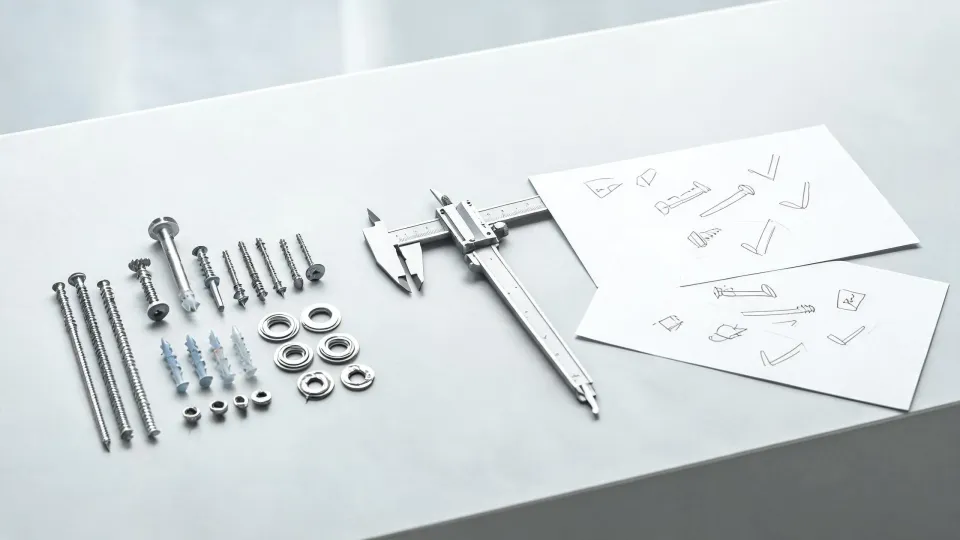
There isn't one fastener that works for every job. That's a lesson I learned the hard way over five years of managing facility purchasing for a 60-person company. I handle all maintenance and repair ordering—roughly $45,000 annually across eight vendors, reporting to both operations and finance. And the thing that surprises people outside this role is how much the "wrong fastener" costs. Not the price of the part. The rework, the damage, and the time in between.
Most purchasing situations fall into one of four scenarios:
- You're hanging something on hollow drywall.
- You're securing a wheel or axle.
- You're distributing load on soft or thin material.
- You're working with small, delicate parts.
There's also a question that comes up more often than you'd think: what is the kerf of a table saw blade, and does it affect which fasteners you should buy? I'll address that too. (Should mention: none of this came from a textbook. These are lessons from orders that went sideways.)
Hanging Heavy Items on Hollow Drywall
If you've ever watched a shelf pull out of drywall, you know that sinking feeling. The plastic screw anchors sold at the hardware store are fine for a picture frame or a key rack. They are not fine for shelving, cabinets, or anything with real weight.
That's where toggle bolts come in. Specifically, we've standardized on the hillman toggle bolt 372518. The spring-loaded wings expand behind the drywall and spread the load across a much wider area than a screw anchor ever could.
Three things matter when picking a toggle bolt. First, the wing span—a wider wing distributes load better against the back of the drywall. Second, screw length—you need enough thread to pass through the mounting surface, the drywall, and still engage the wings. Third, material—zinc plating is standard for interior use, but stainless steel is worth the upgrade in any moisture-prone location. Bathroom cabinets, exterior brackets, even a basement workshop wall.
Here's the counter-intuitive part. Everything I'd read said the cheapest toggle bolt works fine for standard drywall, so buy the budget option. In practice, we ordered a cheap brand once—a dozen toggle bolts for less than half the cost of the Hillman units. Three failed within a year. One failure was a cabinet that pulled out of the wall, causing $400 in damage to the cabinet and the floor. That's the total cost of ownership problem in one sentence. The unit price difference was about $8. The rework cost was $400.
One more thing worth knowing: per FTC advertising guidelines, claims like "guaranteed never to rust" or "will hold any weight" need actual evidence behind them. That's not a problem for well-established manufacturers like Hillman, but it's a useful filter when you're evaluating off-brand fasteners. If the packaging is heavy on slogans and light on spec sheets, you're buying marketing, not engineering.
Wheels, Axles, and Things That Spin
If you're working with casters, carts, tool stands, or seating, you need a fastener that doesn't work loose under rotation. A regular hex nut can vibrate off. A nylock nut provides some resistance, but if the axle is designed for a cap nut, there's a reason.
A hillman axle cap nut secures the axle thread and encloses the end of the axle in one piece. It protects the thread from damage and prevents the sharp end of the axle from catching on anything—or anyone. The design is basically a closed-end nut with a built-in washer face. In our facility, these show up on specialty casters, AV carts, and a few machines that were wired before I took over.
The two specifications that matter: thread size and finish. You need to match the axle thread exactly—a 5/16"-24 nut won't accept a 3/8"-16 axle, and forcing it will destroy both. For finish, chrome or zinc are fine indoors. Stainless steel is the correct choice for anything exposed to weather or regular washing.
The TCO angle here snuck up on us. Cap nuts are tiny, and ordering a handful of them individually means paying shipping that exceeds the part cost. According to USPS pricing effective January 2025, a First-Class large envelope starts at $1.50 for one ounce. A few cap nuts easily blow past that. We saw a $7 order carry $11 in shipping charges. Now we batch small hardware into one monthly order, which honestly should've been obvious earlier than it was.
When a Standard Washer Isn't Enough
From the outside, a fender washer just looks like a bigger washer. The reality is that surface area is the whole point. A fender washer has a much larger outside diameter relative to its hole size, which means the load gets spread over a wider area. That's what stops the fastener from pulling through thin material.
You need a fender washer when:
- The base material is sheet metal, plastic, or thin plywood.
- The fastener is going into wood that's softer than you'd like.
- You're closing off an existing elongated or oversized hole.
Size terminology matters here. A 1/4" fender washer has a 1/4" hole, but the outside diameter can be up to 1" or more, depending on the series. Compare that to a standard 1/4" washer, which is about 5/8" around. The difference doesn't sound huge until you see it side by side.
A quick note on coatings: "galvanized" is not the same as "waterproof." Zinc electroplating is fine for interior dry locations. Hot-dip galvanized or stainless steel is what you want outdoors. We learned this when a batch of zinc-plated fender washers on an exterior gate started showing rust within a year—not catastrophic, but ugly, and annoying to replace.
The Precision Problem No One Talks About
Here's the one that seems out of place in a fastener article: jewelry pliers. Trust me on this. When you're handling #8 or #10 machine screws, split washers, and small nuts, regular pliers are the wrong tool. They crack the plating, strip threads, and drop tiny parts into inaccessible places.
Jewelry pliers solve that because they're designed for small, precise work. Most have parallel jaws that grip a fastener across the full surface instead of squeezing the edges. The precision tips let you place a washer onto a screw in tight spaces. And the shorter handle length gives you more control—not more force, but the kind of controlled grip that doesn't destroy small hardware.
We keep a pair in the maintenance kit, and honestly, it's the closest thing we have to a three-dollar insurance policy. I should add that I initially resisted this—I thought it was a gimmick. Then a mechanical engineer on our team, who works on laboratory equipment, mentioned she uses them for tiny fasteners. That endorsement was enough for me to try a pair, and I've ordered replacements every time someone borrowed them and didn't return them.
Kerf: The Saw Blade Detail That Affects Fastener Choice
One of the maintenance staff asked me recently: what is the kerf of a table saw blade? It's a fair question, and not just for woodworking. Kerf affects what happens at the joint you're about to create.
What Is Kerf?
Kerf is the width of the cut that a blade leaves in the material. Standard table saw blades are typically 1/8" (0.125"). Thin-kerf blades are around 3/32" (0.094"). A narrower kerf removes less material—meaning you preserve more wood at the cut and the joint fits tighter.
Why Kerf Matters for Fastener Selection
If you're doing a glue-and-screw joint, a wider kerf leaves a wider gap, which means the screw needs to bridge that gap. Longer screws handle that better. If you're cutting a slot to hold a fastener—like a slot for a cabinet hanger bolt—the kerf tells you whether your fastener will even fit. And for general construction, thinner kerf means less waste and less power required, but thin blades can deflect more in hardwood. That deflection can throw off joint alignment, which matters if you're driving screws into the edge of a board.
Honestly, kerf isn't usually the first thing you think about when ordering fasteners. But when you're dealing with precise joinery, it's the kind of detail that separates a fit that's solid from one that's kind of loose.
Telling Your Scenario Apart
If you're not sure which situation applies to you, work through this:
- What's the base material? Hollow drywall or concrete block → toggle bolt territory. Solid wood or metal → keep going.
- Does anything rotate? Wheels, axles, pivots → axle cap nut.
- Is the material thin or soft? Sheet metal, plastic, thin plywood → fender washers.
- Are the parts tiny and fiddly? Precision assembly, electronics, small machine screws → jewelry pliers.
These four questions take about a minute to answer, and they'll get you to the right section of the hardware store or the right search term online.
Here's my final takeaway, after five years of ordering this stuff: the most expensive fastener is the one that fails. It's not the unit cost that matters. It's the total cost of the fastener, the labor, the downtime, and the damage. Pick the right product the first time and you'll spend less in the long run—honestly, you'll sleep better too.

Maren Jorgensen
Maren Jorgensen is an independent hand tool and torque applications analyst covering wrenches, pliers, screwdrivers, hammers, sockets, ratchets, hex keys, and tool sets. She applies ISO 6789-1 torque-tool conformance principles while examining jaw capacity, leverage, fastener engagement, torque range, accuracy, handle geometry, and material hardness. Her practical guides help tradespeople and procurement teams select suitable tools, plan controlled tightening, and compare durability without relying on brand reputation alone.