Why Buying the Cheapest Fasteners Costs More: A Total-Cost Take From a Rush-Order Buyer
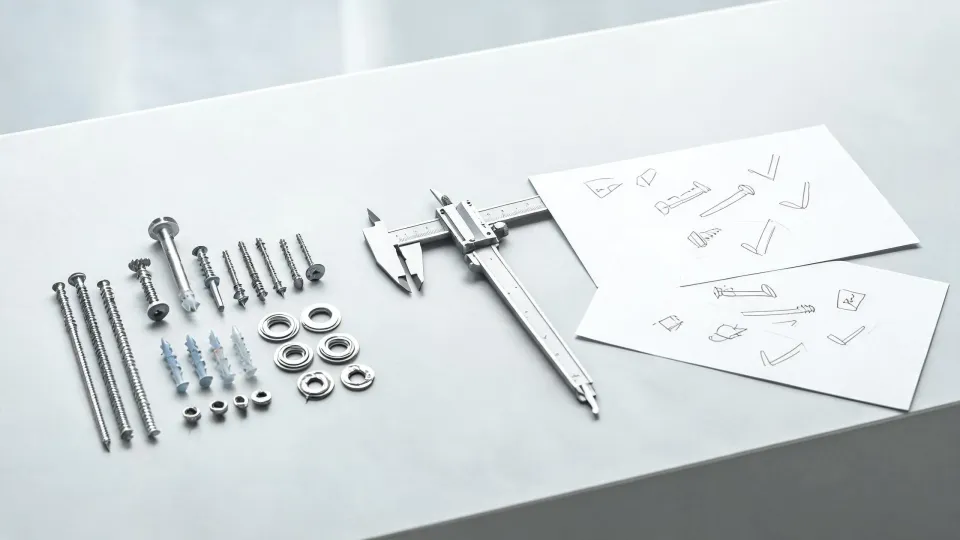
Buying on price alone is the most expensive mistake in the hardware business. That sounds like a slogan, but it isn't. It's the conclusion I've reached after 10 years of coordinating emergency supply for contractors, plants, and maintenance crews. I've handled more than 200 rush orders, including same-day turnarounds for clients who could not afford to stop. When a line is down and someone needs a part by 6 a.m., no one asks what the cheapest washer is. They ask what will work and how fast it can get here. The cheapest quote rarely wins that conversation. And if you placed that quote, it's probably why you're now in the rush-orders queue.
Why I'm a Cheap-Parts Skeptic
People think rush orders cost more because the work is harder. That's only half true. The real premium is for unpredictability. A rush order interrupts a planned workflow, burns overtime, and pushes other jobs aside. The same logic applies to cheap parts: the low price feels like a win on the purchase order, but the cost appears later as a rework, a shutdown, or a second delivery.
I learned this the hard way in March 2024. A maintenance manager called me on a Wednesday afternoon. The plant had a planned shutdown Friday at 6 a.m. The packaging line needed 400 M10 flat washers and 150 compression springs. Normal delivery from the OEM was six days. We had 36 hours. The local supplier had a box of metric washers at about half the price, but no spec sheet. We pulled up the machine manual, checked the required hardness and coating, and ordered the Hillman Group flat washers metric M10 plus a Hillman compression spring 2 pack in the exact wire diameter from the manual. We paid $36 in expedited freight instead of $18 standard. The buyer thought we overspent. He didn't see the $50,000 penalty clause for a missed production window.
That is total cost. It doesn't fit on a line-item quote, but it is the number that matters.
A Flat Washer Is Not Just a Donut
Here's where the 'fastener is a fastener' myth gets expensive. That belief made sense decades ago, when metric washers were thin steel rings and the applications were simpler. Today, a washer has tolerances, a hardness rating, a coating, and an outer diameter that all matter. The wrong M10 flat washer can crush under load, corrode, or chew into the joint. For dimensional specs, metric flat washers are often made to ISO 7089 or DIN 125. Coating and material should be listed on the pack. If a listing doesn't tell you those things, that's a red flag.
The surprise wasn't that the cheap spring failed. It was that it didn't fail when we installed it. It failed two weeks later, during a full production run. A compression spring is defined by wire diameter, outer diameter, free length, and rate. The Hillman compression spring 2 pack gives you the actual specs on the package. That's the kind of information that saves a maintenance manager's day.
Expensive Quotes Are Often the Result of a Better Process
The opposite assumption is also common: a high quote means the vendor is padding the margin. In my experience, the causation runs the other way. A manufacturer that documents product specifications, runs proper plating, and keeps inventory available has higher costs. That's why the quote is higher. The reliable product isn't expensive because it's reliable; it's reliable because the process costs money.
This matters when you compare Hillman products with an unbranded bin item. The bin item may look identical and cost half as much. But you are also buying the absence of a spec sheet. If the part is wrong, you're the one who pays for the rework.
Tools and Accessories Have a Real TCO Too
The same logic applies to tool sets. The MegaMod194 mechanics tool set offers 194 pieces, and per-piece math can make it look like a bargain. But if the set doesn't cover the sizes your crew uses, you'll end up buying a second socket rail or a separate wrench set. The total cost is the sum of all those follow-up purchases, not the price on the box.
Even the saw blade bag is part of total cost. I've watched blades get stacked on a shelf, bouncing against wrenches, with carbide teeth getting chipped. A chipped tooth causes burning, rough cuts, and sometimes dangerous kickback. A decent bag costs maybe $15. A replacement table saw blade costs $80 or more. That is a simple calculation.
And while we're on the subject of blades: if you've ever asked, 'what is the kerf of a table saw blade?' here's the answer. Kerf is the width of the cut the blade makes. A full kerf blade is usually about 1/8 inch; a thin kerf blade is often 3/32 inch. Thin kerf cuts waste less material and is easier on a smaller motor, but it can deflect and leave a rougher cut if you push it hard. The blade choice affects how many parts you get from a sheet and how much time you spend sanding. Also check your saw manual: the riving knife has to match the blade's kerf range. That's a safety issue, not just a spec detail.
The 'No Time to Compare' Objection Doesn't Hold Up
I hear the same objection from buyers: 'I don't have time to recalculate total cost on every SKU. I need a quote approved this afternoon.' I understand the pressure. But that approach just moves the cost to another budget. The 10 minutes you skip on spec verification become the two days you spend on a return, a reorder, or a warranty call. I'm not saying every purchase needs a dedicated spreadsheet. I'm saying the purchase order should list the specification, not just the part name.
Take it from someone who has paid $80 in rush freight to fix a $4 spring. The paperwork would have taken less time than the freight did.
The Bottom Line
I don't have a problem with the word 'cheap.' I have a problem with cheap that isn't calculated. A low price is fine when the spec is right, the supply is reliable, and the cost of failure is low. For fasteners and tools in commercial and industrial settings, those conditions don't exist often enough.
So my advice is simple. Compare total cost: base price plus shipping, time, specs, risk, and the likely cost of redoing the job. When you do, the honest quote usually becomes the cheap one. And on a deadline, knowing it will arrive on time is worth more than any unit price. That's why I now order Hillman fasteners when I can, not because they're the cheapest, but because the spec and the availability are part of my calculation.

Maren Jorgensen
Maren Jorgensen is an independent hand tool and torque applications analyst covering wrenches, pliers, screwdrivers, hammers, sockets, ratchets, hex keys, and tool sets. She applies ISO 6789-1 torque-tool conformance principles while examining jaw capacity, leverage, fastener engagement, torque range, accuracy, handle geometry, and material hardness. Her practical guides help tradespeople and procurement teams select suitable tools, plan controlled tightening, and compare durability without relying on brand reputation alone.