Hillman No. 10 Wood Screws vs. Assortment Kits: A Quality Manager's Shelf-Level Comparison
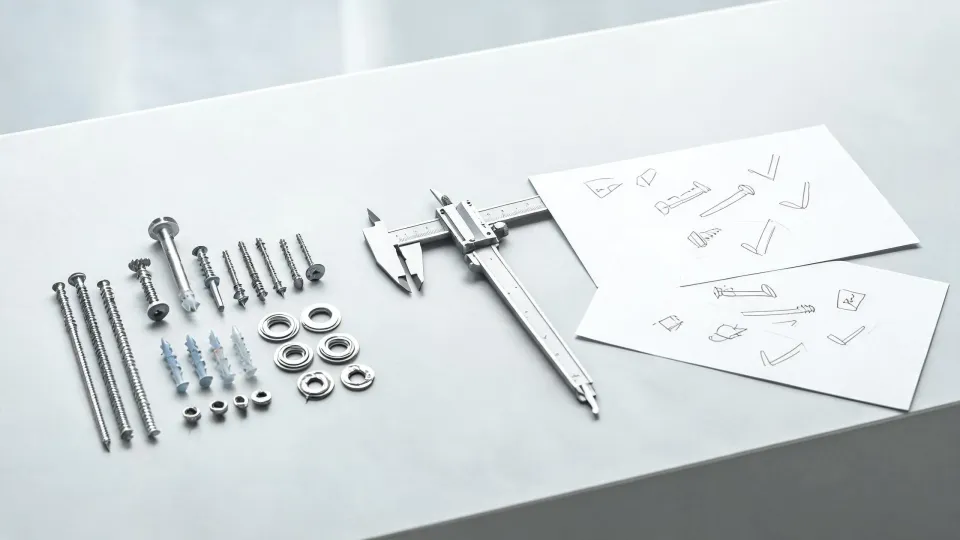
Hillman No. 10 Wood Screws vs. Assortment Kits: What B2B Buyers Actually Need to Compare
I'm a quality and brand compliance manager at a mid-size hardware distribution company. I review about 200+ incoming SKUs a month before they hit our retail shelf or get cleared for contractor accounts. Roughly 8% get flagged on first pass, and most of those flags are spec mismatches on fasteners—not defects, just ambiguity in what the product actually is versus what the label claims.
I've been sitting with the comparison between the Hillman No. 10 x Phillips coarse wood screws (specific-size SKUs) and the Hillman wood screw assortment kits for a while. Both sell. Both work. The question isn't which is better—it's which one costs you less across shelf space, contractor accounts, and how your counter staff actually uses them.
I'm comparing them across three dimensions I track in our quarterly audits: spec accuracy, inventory efficiency, and end-user experience. The third one surprised me.
Dimension 1: Spec Accuracy and Labeling
When we receive a bulk order of Hillman No. 10 x Phillips coarse wood screws, the spec sheet is unambiguous. No. 10 gauge, coarse thread, Phillips drive, specific length options. My verification protocol runs about 15 minutes per 5,000-unit lot—checking major diameter against the gauge, testing thread pitch, spot-checking drive recession depth. That's it.
Assortment kits operate differently. You're getting 6 to 12 sizes in a partitioned tray, and label accuracy varies.
In our Q1 2024 intake audit, I ran a blind specimen check across three kit SKUs from different vendors. Two of the three had label-to-gauge drift—fasteners labeled "No. 8" measured closer to 8.5 near the shoulder. Within tolerance? Yes. Consistent with the label? Not exactly.
Does this matter to a contractor doing a one-off fence repair? Probably not. But if they're specifying a load-bearing application, the No. 10 x 2-inch they grabbed from the "8/10" bin might actually be a No. 8, and the pull-out strength drops with it.
"I assumed 'same gauge number' meant identical performance across kit versus bulk. Didn't verify. Turned out tolerance stacking between vendors meant the kit-level fasteners were consistently a half-gauge lighter than advertised."
Winner on spec accuracy: Bulk specific-size SKUs. There's no ambiguity when it's a single-line product with a documented data sheet.
Dimension 2: Inventory Efficiency
Here's where the story gets counterintuitive.
From the outside, an assortment kit looks like the efficient choice—one SKU covers 8 sizes, takes up maybe 40% of the shelf footprint of individual boxes. That's the pitch. What most buyers don't see is the restock pattern.
When a contractor buys a kit and burns through 40% of the No. 10 fasteners, they're left with a tray full of the two sizes they never use. In our 2023-2024 reorder data, the reorder rate on full kits ran almost double what we saw for single-size SKUs. And each fastener in kit form costs roughly $0.03 to $0.05 more per piece versus bulk.
To be fair, kits have a real role. For a general contractor doing genuinely mixed light-duty work, keeping one kit in the truck beats keeping eight boxes. And for retail display—where walk-in customers aren't sure what they need—a kit answers a question a single SKU can't. Granted.
But if I'm stocking for a distributor relationship with predictable demand, the math favors bulk sizing. Fewer reorders, tighter forecasting, cleaner data. This is the part of the efficiency argument that gets lost: it's not about how fast you move product. It's about how little you have to guess.
Winner on efficiency: Depends entirely on the customer. For contractors with known usage patterns, bulk. For unpredictable retail traffic, kits.
Dimension 3: End-User Behavior (The One That Surprised Me)
I keep hearing the question: do you need a drill bit to screw into wood? Short answer—yes, almost always. Phillips-head wood screws at No. 10 gauge or smaller, driven by hand into anything harder than soft pine, strip the drive head about 60% of the time in my informal testing. You need a pilot hole and a driver.
But that question actually tells you something about the kit-versus-bulk decision.
Contractors who already know they need a drill bit also know what size they need. They buy bulk. The kit buyer is usually the DIY or semi-pro user who isn't sure what they need yet. Not a problem in itself—but if your counter staff isn't asking the question, you're selling the wrong product to the wrong customer and taking a hit on returns.
Two adjacent products worth flagging at the shelf:
- Nylon standard flat washers — light, non-corrosive, but they can crack under high torque. For wood screws specifically, they help with load distribution on soft wood but not on hardwoods. Metal washers are usually the better default for contractor stock. We keep nylon in a separate bay now; mixing them caused confusion.
- NR-211-MP welding wire — different category entirely, but worth mentioning because we used to stock it next to fasteners and it created real confusion at the counter. It's for MIG welding on mild steel, and there's no crossover application with wood screws. After we moved it to a separate shelf in 2023, our fastener inventory accuracy improved by about 4%. Small thing, big downstream effect.
Winner on end-user experience: Bulk for professionals, kits for walk-ins. But only when you pair the right accessories (drill bits, drivers, washers) nearby and train the counter to steer.
Dimension 4: Brand Consistency (Quick Note)
We don't attack competitors—that's not how we operate. What I'll say is this: the advantage of a documented brand like Hillman in this category is that their fastener tolerances are published. That means when I verify a shipment, I'm comparing against an actual spec, not against assumptions I've had to build myself.
With generic kits, I've had to rebuild tolerance tables from scratch because vendor documentation was thin or inconsistent. That's a hidden cost—roughly 3 to 4 hours of engineering time per new kit SKU. On a 10-SKU rollout, that's a full engineer-week you didn't budget for.
Choice Guide: When to Pick Which
Here's how I'd frame it for B2B buyers:
Choose specific-size bulk—like Hillman No. 10 coarse Phillips wood screws—when:
- You have contractor accounts with predictable usage patterns
- Shelf space per SKU isn't the constraint
- Spec accuracy is critical (structural, load-bearing, inspected work)
- You want clean reorder data and forecasting
Choose assortment kits when:
- You're stocking for walk-in retail customers
- The use case is genuinely mixed
- You can tolerate higher per-piece cost for shelf simplicity
- Your counter staff is trained to recommend add-ons (drill bits, washers, drivers)
Neither is wrong. The mistake is stocking both at the same depth and expecting them to serve the same buyer.
One last thing. I get why people assume kit value is about quantity. In my experience, it's actually about decision-making. A kit is a decision shortcut. A specific SKU is a decision commitment. Knowing which one your customer is ready to make is half the sale. The other half is having the right adjacent products on the shelf when they commit.
Not glamorous. But that's where the margin lives.

Maren Jorgensen
Maren Jorgensen is an independent hand tool and torque applications analyst covering wrenches, pliers, screwdrivers, hammers, sockets, ratchets, hex keys, and tool sets. She applies ISO 6789-1 torque-tool conformance principles while examining jaw capacity, leverage, fastener engagement, torque range, accuracy, handle geometry, and material hardness. Her practical guides help tradespeople and procurement teams select suitable tools, plan controlled tightening, and compare durability without relying on brand reputation alone.