Wrong Screw, Wrong Search, Same Bill: Why Hillman Drywall Screw #8 x 2-1/2 Deserves a Real Spec
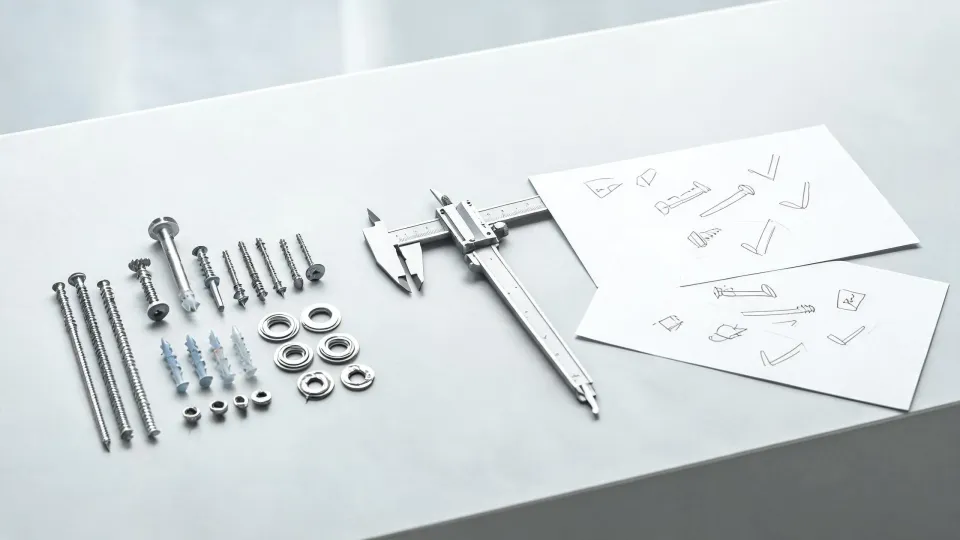
Wrong screw, wrong search, same bill
Last month, six corroded fasteners landed on my desk in a plastic bag. They came from a ceiling repair that was only 14 months old. Dark moisture lines ran under each head. The contractor had used a Hillman drywall screw #8 x 2-1/2, which is the correct screw for attaching drywall to framing in a dry interior. The ceiling was a covered exterior porch. The screw did not fail because it was cheap. It failed because the environment was outside the intended spec.
That distinction matters in my job. I am the quality and brand compliance manager for a hardware distributor. I review 200-plus unique SKUs a year, and in Q1 2026 I rejected roughly 4% of first deliveries because the package, coating, or thread spec did not match what was ordered. In other words: I catch the small differences before they become your wall, your deck, or your invoice.
The surface problem: fasteners look more alike than they are
From the outside, a #8 x 2-1/2 screw looks almost identical to another house-brand #8 x 2-1/2 screw. Same length, same gauge, same general thread. People assume the remaining difference is brand price. The real difference is specification: steel composition, hardening, thread style, head shape, and surface coating.
That is why the search hillman drywall screw #8 x 2-1/2 is a better search than drywall screws for cheap. It names a brand, a product type, a gauge, and a length. That is still not the whole specification, but it is a good start. The package then tells you the intended substrate. A drywall screw intended for wood-framed drywall is not automatically specified for steel studs or exterior exposure.
I get a little cautious when people write hillman dry ext screws. The dry ext term is a product-family label, not a universal approval for every outdoor condition. It narrows the field, but you still need the full product code, length, and application line on the package. If the package says exterior trim, I will not choose it for a submerged deck ledger. That would be me guessing, and guessing is not a quality process.
The same issue appears in wood screw assortment kit reviews. Reviewers rate whether the case is sturdy, whether the sizes are marked, and whether the bits stripped. Those are useful. But no assortment kit is automatically right for every project. A cabinetmaking kit and a deck-screw kit can both earn five stars while solving completely different problems. The right review question is not only which kit is best; it is which kit contains the exact screw for your substrate and moisture level.
The deeper problem: category names hide edge cases
The surface problem is easy to see. The deeper problem is that people use brand and product names as shortcuts, expecting the name to carry information it does not actually contain. I have done it myself. You search what does a torsion spring look like, see a photo, and assume any coil with a rod through it is the same. Then you order one with the wrong spring wire size. No part name will save you from an incorrect spec.
When a product fails in the field, I look at the product labeling. Most fastener failures I review did not occur because a company made a bad batch. They happened because a good product was installed in an environment that the label never claimed to cover.
This is the part that surprises people. The failure is not always visible at installation. It shows up later. That delay is what makes hardware quality a boring but essential discipline.
The cost of ignoring the difference
Let's be honest about what I see in returns and warranty claims. The price difference between a screw that is merely similar and one that is specified for the job is not the thing that ruins your budget. The rework is.
In 2025, one contractor returned a box of rusted fasteners from a deck repair. The product he needed cost roughly eleven dollars more for the whole project. The repair invoice for the already-installed work was more than seven hundred dollars. The fastener did not fail because it was a cheap brand. It failed because it was a standard drywall screw with no corrosion barrier in a wet application. That eleven dollars would have been the best cost-saving move available.
I am not saying every exterior project needs a premium product. I am saying the correct product is the cheapest product that matches the environment and load. If you compare prices before you compare coatings, threads, and intended use, the final cost belongs to the project, not the per-unit price.
The same logic shows up in compressor and garage-door questions
People are surprised when strange part searches land on hardware-related content. But the logic is identical. When someone types air compressor contact number, they may want customer service. A portion of them actually need the contactor, the relay that sends power to the motor. A compressor that clicks or hums but will not start often has pitted contactor points. Searching for customer service will not fix that. Knowing the part number and rating is the first meaningful step.
Garage doors have the same problem. If you ask what does a torsion spring look like before you replace a broken spring, you already understand that visual identification is only the beginning. The shape tells you it is a torsion spring; the size and wire gauge tell you whether it matches your door weight. A part can look right and still be dangerously wrong. That is true for garage springs and for drywall screws.
What I would do instead
Here is what I would do if I were buying fasteners for my own project. Start with the application, not the product category. Write down the material you are fastening, the material underneath it, the environment, and the failure risk. Then search for a product that explicitly says it covers that situation. A search like hillman drywall screw #8 x 2-1/2 gives you the fastener family. Add the project condition to your question, then verify the label before ordering.
Quality does not mean buying the most expensive option. Quality means making the specification decision before the price decision. In my experience reviewing thousands of deliveries, lowest price is almost never the problem. Lowest specification is.
I will take a correct fastener over a famous brand plus a guess. And if you can identify the environment and the load, most good brands, including Hillman, have a product that will honestly handle it. That is the boring part of my discipline: exactness is more useful than confidence.

Maren Jorgensen
Maren Jorgensen is an independent hand tool and torque applications analyst covering wrenches, pliers, screwdrivers, hammers, sockets, ratchets, hex keys, and tool sets. She applies ISO 6789-1 torque-tool conformance principles while examining jaw capacity, leverage, fastener engagement, torque range, accuracy, handle geometry, and material hardness. Her practical guides help tradespeople and procurement teams select suitable tools, plan controlled tightening, and compare durability without relying on brand reputation alone.