The Best Fastener Is the One You Can Reorder: 5 Years of Buying Hillman Hardware
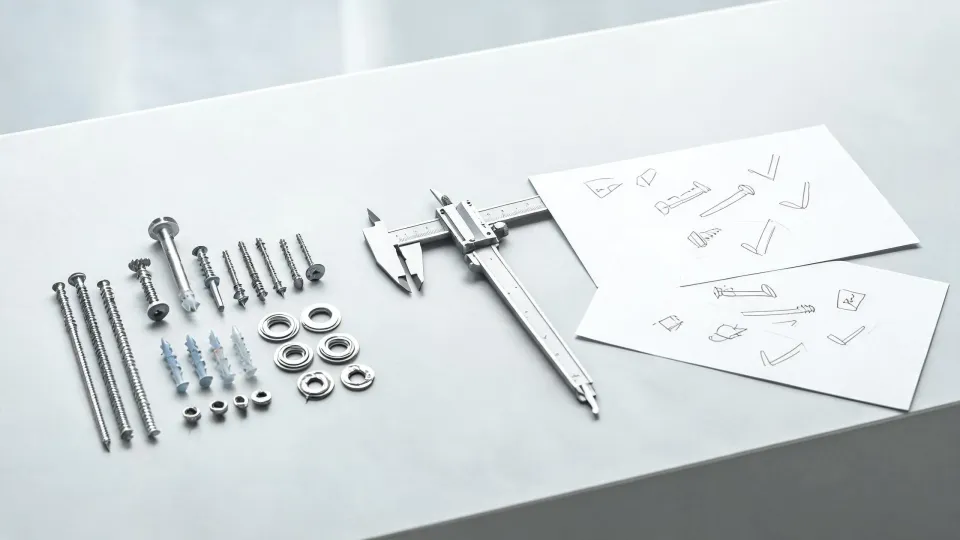
Let me start with a caveat: I'm an office administrator, not a contractor. I've never framed a wall or poured an anchor. What I do is manage purchasing for a company of roughly 400 employees across three locations. I report to both operations and finance, which means I get squeezed from two directions—operations wants the part now, finance wants the invoice clean. When I took over this job in 2020, I inherited a drawer full of mismatched screws, three half-empty toolkits, and no system for ordering replacements. Since then, I've processed 60–80 hardware orders a year, give or take. Maybe 70. I'd have to count in the system.
And after five years of that, I've landed on a firm opinion: the best fastener isn't the strongest or the cheapest one. It's the one you can reorder with confidence. You want a product that arrives the same every time, with printed specs you can actually read and trust. That consistency is what saves real money—because it saves mistakes, rework, and the wrong part.
That's why Hillman is my baseline for a lot of office maintenance orders. But not all of them. And learning where that baseline doesn't apply has been just as useful as knowing where it does.
Why I Started Standardizing on Hillman Fasteners
Early on, I bought whatever generic brand was cheapest at the nearest supply store. That's what a budget-conscious admin does, right? Find the low price, check the quantity, move on.
The problem showed up on reorder. Same product name, different packaging, slightly different dimensions. The screws I ordered in March had a different head profile than the ones I got in June. Nothing catastrophic—until I was mid-task with a box of mismatched screws and a wall-mounted sign that wouldn't sit flush.
That's when I switched to the Hillman fasteners Phillips drill screw 100-pack. It's a boring name and a boring product, which is exactly what I want. The 100-pack means I reorder once per quarter instead of weekly. The drive type, length, and thread gauge are printed right on the box. I can hand that box to a repair tech and know they'll get a usable part.
It took me three years and, honestly, well over a hundred orders to realize brand consistency matters more than brand reputation. Reputation got my attention. But consistency is what kept me from running to the hardware store at 7 a.m. with a stripped screw and a deadline.
The Screw Eye Lesson That Changed My Buying
Here's a concrete example: Hillman screw eyes.
We needed to mount a heavy directory board in our main lobby. Acrylic sheet, aluminum frame, probably 25–30 pounds. I ordered a generic pack of screw eyes from a supplier I won't use again. They looked identical to what we'd been using. Bright plating, right outside diameter, same nominal size.
But the thread pitch was subtly different. The first one went into the pre-drilled hole at an angle and stripped the wood. The second did the same. By the third, my maintenance tech had widened the hole to compensate—and then the screw eye had nothing to bite into. We ended up moving the whole board six inches to the left.
When I put a generic screw eye next to a Hillman screw eye of the same nominal size, the difference finally made sense to me. The threads per inch didn't match. On paper, both said "screw eye." In practice, only one threaded in cleanly and seated flat.
That comparison changed my entire approach to buying hardware. I no longer look at whether a product looks the same as a previous one. I check whether the spec is printed and consistent. If a manufacturer can't keep threading consistent on a simple screw eye, I'm not going to trust their anchors or hinges for anything that matters.
The Counter-Intuitive Tools Take: Less Is More
You might expect an office administrator's tool budget to go toward a giant toolkit. Mine doesn't. Here's the part that surprised me:
An office doesn't need contractor-grade tools. It needs three or four tools that actually fit its problems.
For me, those three are a USA screwdriver set, a small level, and a Slim-Jaw adjustable wrench D86932. That last one has saved me more times than I can count. The slim jaw profile fits into places a standard wrench won't go—like the nut on our office water filter housing, or the adjustment bracket on a door closer that sits too close to the wall.
What I learned the hard way is that buying "just in case" tools leads to a drawer full of stuff nobody touches. I bought a multi-bit screwdriver set first, then a longer set, then a ratcheting set. What I actually use is the USA screwdriver set with replaceable magnetic tips. It lives in a labeled drawer, and the techs know where to find it.
When I compared my tool orders from Q1 and Q2 of last year, the pattern was obvious: every time I bought a specific tool for a specific job, I used it. Every time I bought a "maybe this will be useful" tool, it stayed in the drawer. The D86932 was a specific-job purchase—and now it's the first thing I pack for a site visit.
What Is a Door Hinge Radius? (I Didn't Know Until It Cost Me)
Let me share a phrase I didn't know a year ago: door hinge radius.
We needed to replace a hinge on a fire-rated door. I measured the old hinge's length and width and ordered a standard replacement. It arrived, and it didn't fit. The corners on the new hinge leaf were rounded, but the door frame's cutout was square. Or maybe it was the other way around—the point is, the geometry didn't match.
Here's the definition I needed: the hinge radius refers to the corner geometry of the hinge leaf. A square-corner hinge has full 90-degree corners. A radius-corner hinge has rounded corners, and the radius is the measurement of that curve, typically 5/32" or 1/4" depending on the manufacturer. If the hinge's corner radius doesn't match the door or frame cutout, the hinge won't sit flush.
That mistake cost us two days with the fire door propped open because we couldn't close the latch correctly. We didn't have a formal process for verifying hinge details before ordering. We do now. "Check the corner radius" is the first item on my door hardware checklist. (Note to self: yes, interior hollow-metal doors count too.)
Stories like this are exactly why I value clear documentation in hardware. When a manufacturer's catalog tells me the radius, the thread pitch, and the material, I can order once and install once. When it doesn't, I budget for a second trip.
Where I Draw the Line (The Honest Version)
You might be thinking: "So you just stick with one brand because it's convenient."
No. I stick with brands that give me consistent, verifiable specs. Hillman does that well. But I'll be honest about where I don't default to them:
If you're a contractor buying fasteners by the pallet, my opinion doesn't apply to you. You're working with structural load requirements, engineering approvals, and volume pricing. That's a completely different buying decision. And for light-duty, non-critical work, generic hardware is sometimes fine. If I'm mounting a small plastic sign that weighs two pounds, I don't care what brand the screw eye is. It'll probably work.
The honest truth is that Hillman is the answer for maybe 80% of my office hardware orders. For the other 20%—specialized hinges, unusual anchors, custom fasteners—I call a specialty supplier and talk to an actual human. That's not a failure of the brand. That's me matching the tool to the problem, which is the whole point.
There's also a transparency angle. The FTC's advertising guidelines (ftc.gov) require claims to be truthful and substantiated, which I think is a fair bar to apply to any product I order. I treat spec sheets the same way I treat USPS's published rate tables on usps.com—clear, dated, verifiable. Those January 2025 rates are still posted if you want to check. I like the same courtesy in my hardware catalogs.
The Bottom Line
After five years of buying Hillman hardware and other maintenance supplies, I've come to believe something that would have surprised me in 2020: the most expensive mistake isn't buying the wrong price tier—it's buying the wrong specification. The wrong screw eye thread, the wrong hinge corner radius, the wrong tool dimension. You can't see those mistakes when you're comparing prices in a web browser.
My advice for anyone in a similar position: pick a dependable baseline supplier, learn its product lines, and reorder with confidence. Then learn the specific places where your baseline doesn't belong. I did that with Hillman, and the result is fewer trips to the hardware store, fewer mid-project surprises, and a supply drawer that actually looks organized.
Buy for your actual situation. The boring, consistent, well-labeled product usually wins. At least, that's been my experience keeping three offices running—and yes, all the doors still close.

Maren Jorgensen
Maren Jorgensen is an independent hand tool and torque applications analyst covering wrenches, pliers, screwdrivers, hammers, sockets, ratchets, hex keys, and tool sets. She applies ISO 6789-1 torque-tool conformance principles while examining jaw capacity, leverage, fastener engagement, torque range, accuracy, handle geometry, and material hardness. Her practical guides help tradespeople and procurement teams select suitable tools, plan controlled tightening, and compare durability without relying on brand reputation alone.