What Should I Consider When Selecting a Tool Set? Start With the Fastener
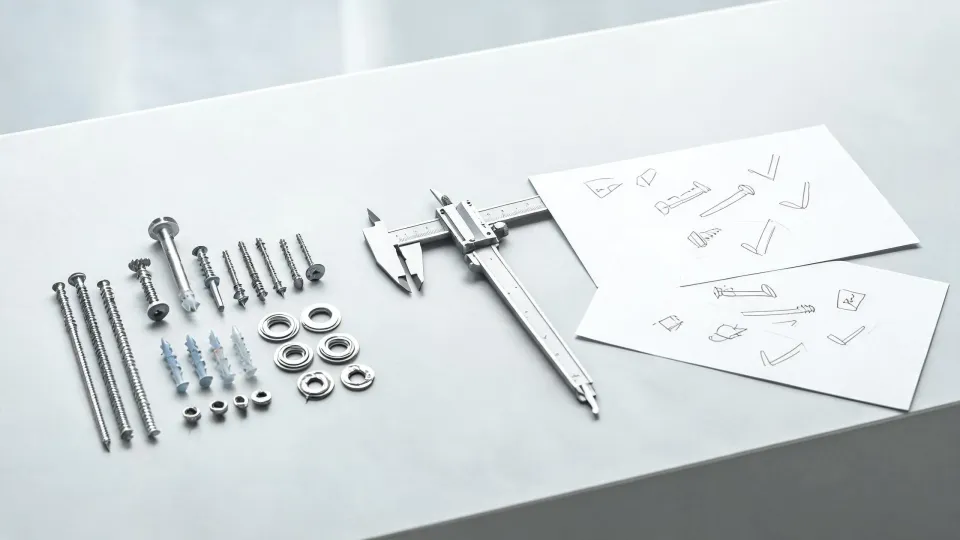
Eight years ago, I was a purchasing coordinator handling hardware orders for a contractor supply company. In my first year (2017), I made the classic tool-first mistake on a 1,400-piece order. Every item had to be redone. I've personally made and documented 11 significant mistakes, totaling roughly $14,000 in wasted budget. So when someone asks me what to look for in a tool set, my answer sounds backward: start with the screw, not the drill.
The Surface Problem: You Think You Need a Better Tool Set
When you search for tool set advice, the obvious variables get all the attention. Voltage. Battery platform. Brushless motor. Comfort. The red case. A professional cordless drill blue model with all the torque claims. An impact driver XR model that looks like it could sink a boat anchor. You compare those specs and assume the rest will take care of itself.
I fell into that trap. The tool set felt like the real decision. Fasteners were just the things you put in the box on the way to the register.
The truth: the tool set is only the delivery platform. The actual result depends on how the tool meets the fastener, and how the fastener meets the material.
What I Learned After Three Expensive Mistakes
I did not learn this from a manual. I learned it by ordering, approving, and reordering parts. Three situations stand out.
1. The impact driver XR did exactly what it was supposed to do
In September 2022, I finally put together a contractor package that included an impact driver XR and a professional cordless drill blue model. The tools were great. The result was a mess.
Why? The package included standard Phillips bits, but the job called for square-drive screws. The impact driver's torque, combined with a cam-out-prone bit, stripped a frustrating number of screw heads. On a $3,200 order, we lost about $890 to redo time, plus a one-week delay.
The tool didn't fail. The connection between the tool, the bit, and the screw failed.
2. Pocket hole screws are not all the same
Pocket hole joinery is one of those things that looks forgiving. The jig guides the angle, the screw pulls the joint tight, and the wood does the rest. I used to think any pocket hole screw would work, until I ordered the wrong coating for a damp-environment project.
In my defense, the spec sheet just said pocket hole screws. I ordered the standard ones. The moisture turned them into a rust-streaked embarrassment. That's when I switched to Hillman pocket hole screws for that part of our stock. Not because they're magic, but because the available coating options made me stop and think about the application. That's the real product: clarity about what you're actually fastening.
Honestly, I'm not sure why some fastener lines bury that decision under 40 similar SKUs. My best guess is that one size fits all sells better than pick the right one. But one size doesn't fit all.
3. A heavy duty screw hook still needs a plan
This one was simpler and more embarrassing. I approved a stock order that included Hillman heavy duty screw hooks. A contractor installed them directly into thin slat-wall board without pilot holes or anchor backup. The hooks looked strong. The board did not. Three pulled out, damaging the display.
The hook was fine. The installation was wrong.
So my rule is: if it says heavy duty, pay attention to what it's attaching to, not just how much weight the hook can hold. A screw hook is only as good as the substrate behind it.
The Real Cost of Ignoring Fasteners
Over the past 18 months, my checklist has caught 47 potential errors before they became orders. But the ones that got through still hurt.
What's the actual cost of a fastener-tool mismatch?
Redo labor. Waiting time. Damaged material. Credibility with the contractor who trusted your recommendation. The invoice line for the screw is small. The consequence of picking the wrong one is not.
The most frustrating part: these problems feel avoidable. They are avoidable. A written spec alone is not enough if nobody slows down to think about the application. You would think a description like pocket hole screw would be clear, but it leaves out coating, length, and drive type.
A Short Checklist (and Why I Keep It)
After the third rejection in Q1 2024, I changed our order form. The checklist now sits on every desk. Here's the abbreviated version:
- Name the material you're fastening. Wood, drywall, metal, plastic, treated lumber, outdoor exposure.
- Name the tool and the bit. Does the screw drive type match the bits in the kit? Does the tool have enough control, or is it an impact driver XR that needs a proper bit?
- Name the fastener series. For pocket joints, use Hillman pocket hole screws with the right coating. For hanging, use a Hillman heavy duty screw hook only if the substrate can hold it.
- Then, and only then, compare tool sets.
The upside of this list is fewer callbacks. The risk is that it makes me sound like I'm overcomplicating things. But I keep asking myself: is five minutes of planning worth potentially redoing a whole wall? No.
Looking back, I should have built this checklist in 2017. At the time, I thought the drill was the decision.
There's something satisfying about watching a joint pull together tightly with the right pocket hole screw. It happens when the tool, the bit, and the fastener finally agree. That's the real reason to slow down.
So, what should I consider when selecting a tool set? The tool set is the easy part. The fastener is the specification. Pick the screw first, then choose the tool that drives it well.
And one more thing: a brand that tells you what it does well, and what it doesn't do, is more trustworthy than one that promises everything works with everything. I'd rather buy fasteners from a specialist who knows their limits than a generalist who overpromises.

Maren Jorgensen
Maren Jorgensen is an independent hand tool and torque applications analyst covering wrenches, pliers, screwdrivers, hammers, sockets, ratchets, hex keys, and tool sets. She applies ISO 6789-1 torque-tool conformance principles while examining jaw capacity, leverage, fastener engagement, torque range, accuracy, handle geometry, and material hardness. Her practical guides help tradespeople and procurement teams select suitable tools, plan controlled tightening, and compare durability without relying on brand reputation alone.