The 48-Hour Anchor: What a Quality Inspector Learned About Hillman Fasteners
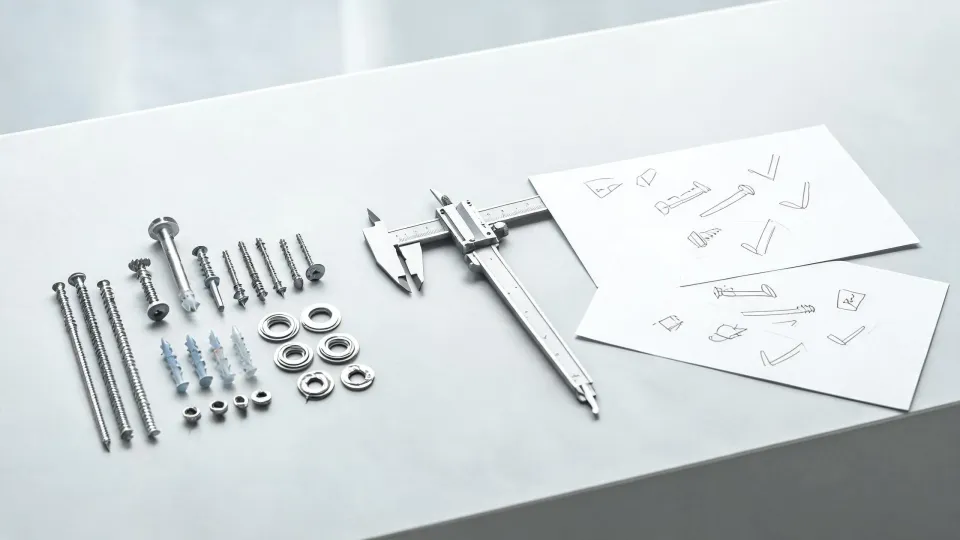
It started with a Tuesday call I almost ignored. Back in March 2025, a contractor called, and we'll call him Dave. He had forty-eight hours to get a commercial wall anchor installation through inspection.
I was in the middle of receiving when he called. A fresh pallet of Hillman fasteners siding nails 461438 had just come in, and I was checking labels and finish. That is what I do. I work as a quality manager at a fastener distributor, and every week I go through inbound shipments. In 2025, I rejected just under 2 percent of first deliveries because of mislabeled SKUs, damaged plating, or the wrong coating. I keep a caliper and a thread gauge on my desk. You would be surprised how often labels lie.
A Bad Time to Save Money
Dave's problem was simple. The project drawings specified a Hillman anchor kit. Not 'an anchor that works the same.' Not 'whatever is on sale.' The exact product number was on the submittal, and the inspector would check it against the labeled boxes. His usual supplier said the kit was backordered with no firm date. Dave had found a cheaper equivalent at another shop; as of March 2025, it was about 40 percent less. He called us to see if we could match the price.
What most people don't realize is that 'backordered' does not always mean unavailable. Sometimes it means the vendor does not want to commit to a date. That is a very different problem. Dave could wait on a maybe, or he could pay for a certainty.
I told him I could not match the price. I also told him I did not think he should ask me to.
The cheaper anchor might hold. I am not going to stand here and call it junk. But 'might' does not pass an inspection. The inspector will look for the label, not run a pull test on the spot. If the box on the wall does not match the submittal, the wall fails.
People think expensive anchors are better because they cost more. It is really the other way around. Products that can document their ratings and their coating are the ones that end up in specs. The price is the effect, not the cause. The testing and traceability are why they cost more.
Dave had maybe two hours to decide before the other shop closed. Normally he would get a couple of quotes and compare. There was no time for that. I told him the hard part: if the cheaper anchor fails, he was not paying for a replacement anchor. He was paying for two more days of labor, a second inspection, a missed deadline, and the conversation with the general contractor. The premium on a specified anchor kit is not just for the steel. It is for the known outcome.
I checked our stock. We had enough Hillman anchor kits on the shelf to cover his first day, and our rep confirmed a next-morning delivery for the rest at a rush fee. Dave asked if I could cut the fee. I probably could have shaved a little. But I did not want to cut the one thing I could not control later. The guaranteed date had a cost. I told him the fee buys you the outcome.
He went quiet for maybe ten seconds. Then he said, put it on the truck.
The Drywall Screw Question
As I was writing up the order, his apprentice piped up with a question I hear at least once a week: what length drywall screw for 1/2 drywall?
That is not a dumb question. It sounds simple, but the simple answer hides a couple of variables.
For 1/2 drywall on wood studs, use a 1-1/4-inch drywall screw. If you are going into steel studs, you usually want a 1-inch Type S screw. The first one is the answer everybody searches for. The second one is the answer that lives in the fine print.
I grabbed the Hillman Kompakt screwdriver set off the counter and pulled the rechargeable 4V cordless screwdriver 42-piece kit out of its case. It is not a drywall gun, and I told him not to use it for a whole room. But it was enough to drive a short screw into a sample block and let him see why length matters. A screw that is too short does not get enough bite in the stud. A screw that is too long can run into a wire or pipe if you are not paying attention. The 1-1/4 inch length is the sweet spot for 1/2 drywall on wood framing.
He got it right away. That little 4V screwdriver with the 42-piece bit set was a decent demo tool, even if it was not built for production drywall. The Kompakt set did the job because it had a proper bit and a comfortable handle. I am not going to lie and tell you those tools make a drywall crew faster. They don't. They are for small repairs and light assembly. But they are perfect for teaching someone the difference between a screw that barely grabs and one that seats the way it should.
Dave's order went out that afternoon. The rest of the Hillman anchor kits showed up on our dock at 6:40 the next morning, and his crew had them on the wall before lunch. Thursday inspection passed. He called me on the way home, sounding relieved. He did not even need to say it. He just told me the boxes matched the submittal.
I also added a box of Hillman fasteners siding nails 461438 to his ticket, because he mentioned a cement-board siding job the following week. He laughed and said to throw it in. That part was not urgent. It was the same idea though: know what you are buying, and know why it matters.
What I'd Tell You If You're in Dave's Shoes
That call stuck with me. Not because Dave was a difficult customer, he was actually easy to work with. It stuck because he almost made a decision on price when the real question was certainty.
If you are ever in that spot, here is my honest advice:
- Start with the deadline, then work backward.
- If an order is already late, 'probably' is not a schedule.
- Ask the supplier to put the delivery date in writing, even if you pay extra for it.
- If a spec calls for a specific product, do not swap it without checking the engineer.
I am not saying Hillman is rust-proof. That would be a silly promise. I am saying a specified product carries a documented coating and a traceable part number. That is what an inspector can verify. The cheaper anchor might have passed. It might have been a perfectly good piece of hardware. But Dave was not in a position to test it. He was in a position to either meet a deadline or explain why he did not.
And to close out the drywall question: 1-1/4-inch drywall screws for 1/2 drywall on wood studs. For steel studs, check the drywall manufacturer's label, but 1-inch Type S is the common call. If you're not sure, grab a screw, a stud, and a scrap of drywall, and prove it to yourself. That is what I did with Dave's apprentice.
One last thing. I don't remember every anchor load rating off the top of my head. Don't hold me to a number without a spec sheet in front of me. But I know where to find it, and that is the whole point. In a rush, a known date is worth more than a low quote. A verified part is worth more than a guess. That is the part I wish more people asked about.

Maren Jorgensen
Maren Jorgensen is an independent hand tool and torque applications analyst covering wrenches, pliers, screwdrivers, hammers, sockets, ratchets, hex keys, and tool sets. She applies ISO 6789-1 torque-tool conformance principles while examining jaw capacity, leverage, fastener engagement, torque range, accuracy, handle geometry, and material hardness. Her practical guides help tradespeople and procurement teams select suitable tools, plan controlled tightening, and compare durability without relying on brand reputation alone.